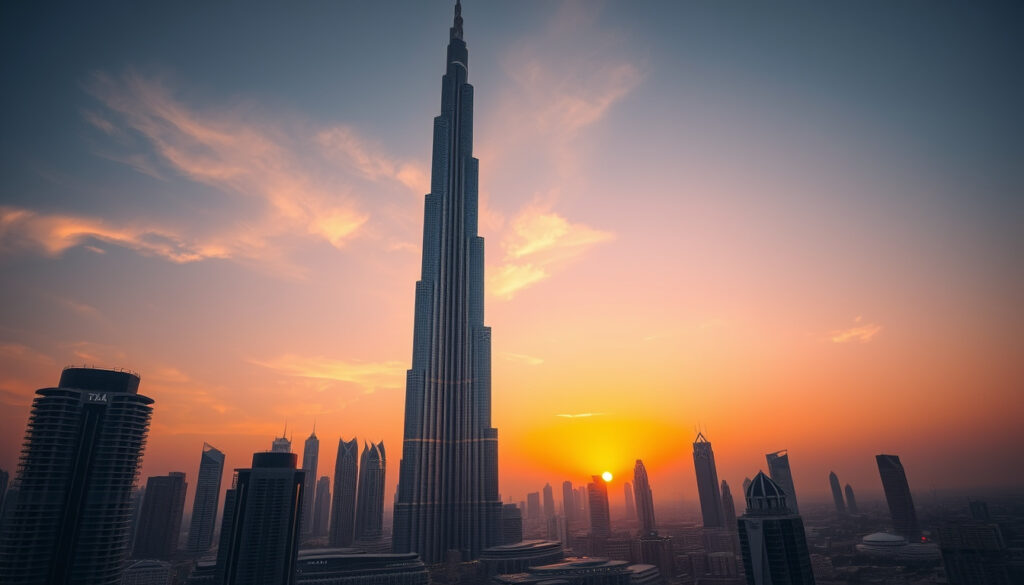
Tallest Building in the World – Burj Khalifa Facts and Rankings
The Burj Khalifa in Dubai has held the title of the world’s tallest building since its completion in 2010, standing at 828 meters (2,717 feet). This remarkable structure not only redefined urban skylines but also established new standards in architectural engineering and vertical construction. As of 2024, no completed building has surpassed its height, and the Burj Khalifa continues to dominate the rankings monitored by the Council on Tall Buildings and Urban Habitat.
Understanding what makes a building the world’s tallest requires examining specific criteria established by international organizations. The CTBUH serves as the official arbiter for measuring skyscraper heights, using precise standards that consider architectural elements rather than temporary additions like antennas. This article provides a comprehensive overview of the tallest buildings globally, their characteristics, and what the future holds for supertall structures.
From the United Arab Emirates to Malaysia and China, nations have competed vigorously for architectural supremacy. This competition has driven innovation in construction techniques, materials, and design, resulting in buildings that push the boundaries of what was once thought possible. The race toward the sky continues, with ambitious projects planned across multiple continents.
What Is the Tallest Building in the World?
- The Burj Khalifa holds the record for the tallest occupied floors, reaching the 163rd level
- Its observation deck at levels 124 and 125 remains the highest accessible point in any building worldwide
- Construction consumed approximately 330,000 cubic meters of concrete along with substantial quantities of steel and glass
- The building was originally designed under the name Burj Dubai before its official renaming
- The total construction cost reached approximately €1 billion, reflecting the massive investment required
- Its buttressed core structural system was specifically engineered to resist wind forces common at extreme heights
- The exact final height remained a closely guarded secret during construction, adding to the building’s mystique
| Metric | Burj Khalifa | Merdeka 118 (2nd) | Shanghai Tower (3rd) |
|---|---|---|---|
| Height (meters) | 828 | 679 | 632 |
| Height (feet) | 2,717 | 2,227 | 2,073 |
| Number of Floors | 163 | 118 | 128 |
| Location | Dubai, UAE | Kuala Lumpur, Malaysia | Shanghai, China |
| Year Completed | 2010 | 2023 | 2015 |
| Primary Uses | Office, Residential, Hotel | Hotel, Serviced Apartments, Office | Hotel, Office |
How Tall Is the Burj Khalifa?
Height Measurements and CTBUH Standards
The Burj Khalifa rises to precisely 828 meters (2,717 feet) when measured to its architectural top, which includes the iconic spire pinnacle. The Council on Tall Buildings and Urban Habitat establishes specific criteria for determining skyscraper height. According to CTBUH guidelines, height is measured to the highest significant architectural element, which may include spires but typically excludes freestanding masts or antennas unless they form an integral part of the structure’s design.
This distinction matters significantly because different buildings measure height using various standards. Some structures count rooftop elements or antenna installations, while others focus solely on occupied spaces. The Burj Khalifa excels across all major categories measured by the CTBUH, holding records for the highest roof, highest pinnacle, and highest occupied floor of any building in the world.
The CTBUH measures architectural height to the highest significant architectural top, which for the Burj Khalifa includes its ornamental spire. Guyed masts and antennas are excluded from calculations unless they represent integral design elements rather than functional additions.
The Tallest Building in the United States
One World Trade Center in New York City stands as the tallest building in the United States, reaching 541 meters (1,776 feet) to its architectural top. The structure, completed in 2014, occupies the site of the original World Trade Center complex and features a distinctive glass facade that angles toward the sky. With 94 floors dedicated primarily to office space, it ranks seventh globally among the world’s tallest buildings.
The building’s roof height of 417 meters increases to 541 meters when including a communications antenna, though CTBUH standards typically exclude such elements from architectural height calculations. This positioning reflects a broader trend in American skyscraper design, which has emphasized sustainable office development over vertical competition with structures in Asia and the Middle East.
What Is the Tallest Building Under Construction?
The Jeddah Tower Project
The Jeddah Tower, also known as Kingdom Tower, represents the most ambitious supertall project currently planned anywhere in the world. Located in Jeddah, Saudi Arabia, this structure was designed to exceed 1,000 meters in height, fundamentally changing the scale at which engineers conceptualize vertical construction. The planned 157-floor mixed-use development was set to include offices, apartments, a luxury hotel, and an observation deck positioned above 500 meters.
However, construction on the Jeddah Tower has stalled since 2018, and no confirmed completion timeline exists as of 2026. While the project remains theoretically active, the lack of recent progress means the Burj Khalifa will maintain its title for the foreseeable future. The delay has created uncertainty about when—or whether—the project will resume full-scale construction.
The Jeddah Tower has experienced significant delays since 2018, with no confirmed completion date established. Information regarding the project’s current status should be verified through official channels, as available details may not reflect the most recent developments.
Recent Construction Activity
Beyond the Jeddah Tower, numerous tall buildings have entered the construction pipeline globally. Recent completions in 2024 include structures ranging from 394 meters down to approximately 339 meters, filling positions 14 through 100 in global rankings. These projects demonstrate continued interest in vertical development, particularly across Asian markets where urbanization pressures remain intense.
Current trends indicate a preference for concrete-steel composite construction methods, which balance strength with efficiency at extreme heights. Mixed-use developments incorporating hotels, offices, and residential spaces dominate new supertall projects, reflecting changing urban priorities that favor vertically integrated communities over single-purpose towers.
How Does the Burj Khalifa Compare to Other Skyscrapers?
Global Rankings and Regional Leadership
China dominates the upper echelons of the world’s tallest buildings, claiming six positions among the top ten. The Shanghai Tower at 632 meters holds third place globally, while the Ping An Finance Center in Shenzhen reaches 599 meters. Additional Chinese entries including the Guangzhou CTF Finance Centre (530m), Tianjin CTF Finance Centre (530m), and CITIC Tower in Beijing (528m) round out the nation’s significant presence in supertall construction.
The United Arab Emirates maintains its position through the Burj Khalifa alone, demonstrating how concentrated ambition can produce singular achievements. Malaysia secured second place globally with Merdeka 118, completed in Kuala Lumpur in 2023, while Saudi Arabia’s Makkah Royal Clock Tower occupies fourth position at 601 meters. South Korea, the United States, and Taiwan complete the top tier, each contributing one building to the upper rankings.
Asian nations host the overwhelming majority of the world’s tallest buildings, driven by rapid urbanization, economic growth, and national prestige initiatives. China alone contains dozens of entries in the top 100, with additional significant concentrations in Southeast Asia and the Middle East.
Record-Holding Achievements
The Burj Khalifa set multiple records upon its completion, and many remain unbroken today. Beyond its overall height, the building holds distinctions for the tallest observation deck, the highest occupied floor, and the most categories in which a single structure leads globally. These achievements required innovative approaches to structural engineering, vertical transportation, and climate control systems designed to function effectively at extreme elevations.
The buttressed core design employed at the Burj Khalifa represented a departure from conventional skyscraper structural systems. This configuration, featuring a central core stabilized by three wing-like extensions, provided exceptional rigidity against wind loads while maximizing interior flexibility. The design has since influenced subsequent supertall projects seeking similar performance characteristics. The Burj Khalifa, the world’s tallest building, can be explored further by checking out a Range Rover for sale.
The Evolution of Tallest Buildings Over Time
- 1930: The Chrysler Building in New York reaches 319 meters, establishing the modern era of skyscraper competition
- 1974: Sears Tower (now Willis Tower) in Chicago completes at 442 meters, holding the record for nearly a quarter century
- 1998: Petronas Towers in Kuala Lumpur reach 452 meters, introducing the twin-tower concept to record heights
- 2004: Taipei 101 in Taiwan completes at 509 meters, incorporating advanced seismic engineering
- 2010: Burj Khalifa opens at 828 meters, shattering all previous records by a substantial margin
- 2023: Merdeka 118 completes in Kuala Lumpur at 679 meters, becoming the second tallest building globally
Established Facts and Uncertainties
| Established Information | Information That Remains Unclear |
|---|---|
| Burj Khalifa stands at 828m architectural height | Jeddah Tower completion timeline |
| Merdeka 118 is second tallest at 679m | Specific reasons for Jeddah Tower delays |
| CTBUH measures to architectural top | Future leadership changes in rankings |
| China has 6 buildings in top 10 | Status of other planned supertall projects |
| One World Trade Center is US tallest at 541m | Long-term structural maintenance implications |
The Significance of Supertall Construction
The pursuit of height in architecture reflects broader aspirations beyond mere records. Supertall buildings serve as economic catalysts, attracting investment, tourism, and skilled workers to their host cities. The Burj Khalifa transformed Dubai into a global destination, while structures in Shanghai and Kuala Lumpur have similarly reshaped regional perceptions of urban possibility.
Engineering challenges at extreme heights have driven innovations applicable across construction industries. Advanced concrete formulations, sophisticated wind mitigation systems, and vertical transportation networks designed for tens of thousands of daily occupants represent just some of the developments pioneered through supertall projects. These innovations frequently filter into conventional construction, improving safety and efficiency across building types.
Environmental considerations increasingly influence supertall design, with architects incorporating energy-efficient facades, greywater recycling systems, and renewable energy integration. The density enabled by vertical construction offers inherent sustainability advantages, concentrating populations and services within walkable urban cores while preserving land for green spaces and agriculture.
Sources and Official References
Height measured to highest architectural element: the spire of the Burj Khalifa rises to 828 meters, establishing a benchmark that has not been surpassed since 2010.
The Council on Tall Buildings and Urban Habitat serves as the authoritative international organization for skyscraper standards and verification. Their methodology for determining architectural height has achieved broad acceptance among architects, developers, and governments, providing consistent criteria against which all claims are evaluated. Additional verification comes from Guinness World Records, Britannica, and comprehensive databases maintained by industry organizations.
Summary
The Burj Khalifa remains the world’s tallest building at 828 meters, a distinction it has held since 2010. Standing in Dubai, this architectural achievement continues to inspire engineering ambition worldwide, even as projects like Malaysia’s Merdeka 118 challenge its secondary rankings. Understanding what qualifies as the world’s tallest requires recognizing CTBUH standards, which measure architectural height rather than including temporary additions. Whether exploring high potassium foods to avoid or comparing global architecture, verified information remains essential for informed understanding. For those interested in related coverage topics, personal accident insurance coverage provides relevant context for travel and safety planning.
Frequently Asked Questions
Which country has the most tall buildings?
China hosts the most tall buildings globally, claiming six positions in the top ten and dozens more in the top 100. Asian nations collectively dominate supertall construction, driven by rapid urbanization and economic development across the region.
What is the tallest building in the United States?
One World Trade Center in New York City stands as the US tallest at 541 meters (1,776 feet), ranking seventh globally. Completed in 2014, it contains 94 floors primarily dedicated to office space.
How is skyscraper height measured?
The CTBUH measures architectural height to the highest significant architectural element, which typically includes spires but excludes freestanding antennas or masts unless integral to the design. This standard provides consistent comparisons across structures.
When was the Burj Khalifa built?
Construction of the Burj Khalifa occurred between 2004 and 2010, with the building officially opening in January 2010. The project consumed approximately 330,000 cubic meters of concrete and cost roughly €1 billion.
Is there a building taller than the Burj Khalifa?
No completed building surpasses the Burj Khalifa’s height of 828 meters. The Jeddah Tower in Saudi Arabia was planned to exceed 1,000 meters but has experienced significant delays since 2018 with no confirmed completion timeline.
What defines a supertall building?
The industry generally classifies buildings exceeding 300 meters as supertall, with those above 600 meters entering a distinct category requiring specialized engineering approaches and construction methods.
What are the primary uses of the Burj Khalifa?
The Burj Khalifa serves multiple functions including office space, residential apartments, and a luxury hotel. The building incorporates observation decks accessible to visitors, adding tourism to its operational portfolio.
More related posts
 To No Avail Meaning: Usage, Synonyms, and Examples
 Guru Salsa Viral di X: Who Is She and Why Is She Trending
 Things to Do Today – Free Scavenger Hunts Near Moss Point
 Queen Size Mattress Dimensions: US, Ireland & Comparisons
 Tamil Yogi Movie Download Isaimini – Legal Risks and Security Threats
 Singapore to Genting Highlands: Bus Time, Cost, How to Get
 Singapore COE Prices Rise: Latest Results and Renewal Impact
 GTA 6 Release Date Confirmed: November 19, 2026 | Price $79.99
