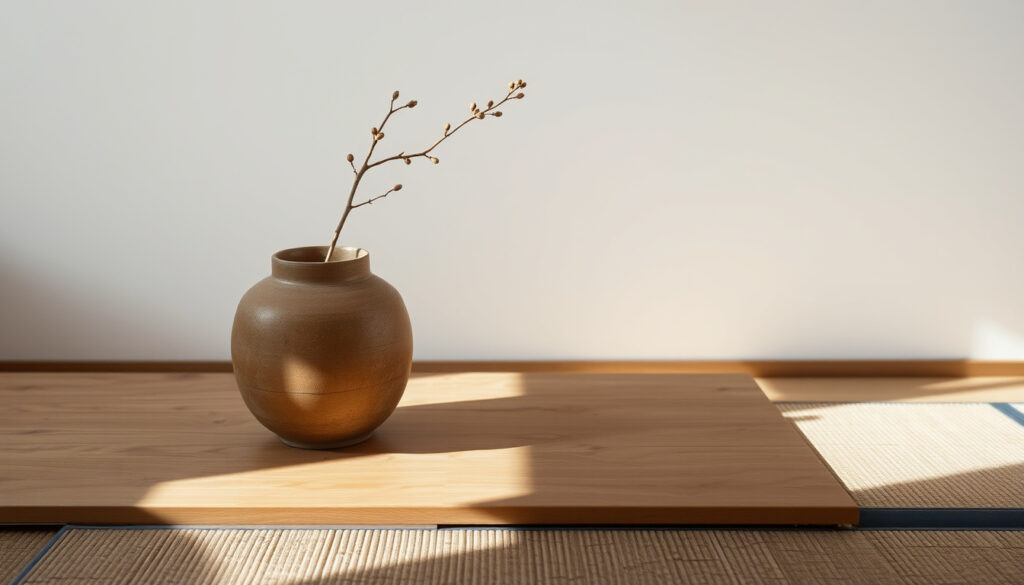
Wabi Sabi Interior Design: A Complete Japanese Aesthetic Guide
Few design philosophies feel as counterintuitive—and as liberating—as wabi-sabi. Instead of chasing perfection, it asks you to appreciate the worn, the uneven, the impermanent — we’ll walk through the core principles of wabi-sabi interior design, how they connect to classic decorating rules like the 3-5-7 and 80/20 approaches, and practical steps to bring this Japanese aesthetic into your home.
Cultural origin: Japan ·
Core principles: 7 ·
Philosophy focus: Beauty in imperfection and impermanence ·
Typical color palette: Earth tones, beige, stone gray, sage green
Quick snapshot
- Seven principles widely attributed to Japanese aesthetics (Emilgroup Magazine (design publication))
- Earth tones and natural materials are core to the style (The Spruce (home improvement resource))
- Exact historical origin of the consolidated 7 principles list — multiple versions exist (Robern (bathroom design brand))
- Whether wabi-sabi is a distinct style or a philosophy applied to any interior (Decorilla (online decorating service))
- Wabi-sabi originates from Japanese Zen Buddhism and tea ceremony (Wikipedia (community encyclopedia))
- Wabi-sabi aesthetic emerged in the 15th–16th century Japanese tea ceremony (The Spruce (home improvement resource))
- Resurgence in Western interiors gained traction from the 2010s onward (HomeByMe (3D design platform))
- More homeowners integrating wabi-sabi with modern and Scandinavian trends (Decorilla (online decorating service))
- Growing focus on sustainable, long-lasting materials aligns with wabi-sabi values (Antic Colonial (tile and design brand))
The table below captures the essential facts at a glance, from origin to modern resurgence.
| Origin | Japan (15th–16th century tea ceremony) |
| Literal translation | Wabi: rustic simplicity; Sabi: beauty of age |
| Number of principles | 7 (Kanso, Fukinsei, etc.) |
| Popularity in West | Resurgence in interior design since the 2010s |
What is wabi-sabi interior design?
Wabi-sabi interior design is an application of the Japanese aesthetic philosophy that finds beauty in imperfection, impermanence, and incompleteness. According to Robern (bathroom design brand), wabi-sabi is often presented as a philosophy rather than a fixed style formula. It emphasizes natural materials, asymmetry, and simplicity, creating calm, grounded spaces that feel lived-in rather than staged.
Homeowners tired of cookie-cutter showrooms can use wabi-sabi to build interiors that feel personal and authentic — without chasing trends. The trade-off: it requires accepting visible wear and uneven textures, which some may read as unfinished.
The approach is regularly contrasted with modern perfectionism because it embraces irregularity instead of flawless finishes, as noted by Robern. Decorating Den (interior design franchise) describes wabi-sabi as rooted in authenticity, balance, and a harmonious connection with nature.
The implication: wabi-sabi interior design isn’t about a specific look — it’s a lens through which you select and arrange objects, preferring the hand-thrown ceramic over the factory-molded one, the reclaimed wood over the engineered plank.
What does wabi-sabi literally mean?
The two words carry distinct but complementary meanings. Wabi originally referred to rustic simplicity, solitude, and even melancholy — the quiet beauty found in a lone mountain hut. Sabi means the beauty that comes with age and patina — the weathered stone, the chipped teacup.
Together, as The Spruce (home improvement resource) explains, they celebrate the transient, imperfect nature of life. Author Leonard Koren, who wrote the landmark book Wabi-Sabi for Artists, Designers, Poets & Philosophers, defined it as “a beauty of things imperfect, impermanent, and incomplete.”
Western design magazines often use “wabi-sabi” as a label for a specific earthy aesthetic, but the original Japanese meaning resists boxed definitions. Applying it as a philosophy rather than a color scheme yields more authentic results.
The pattern: understanding the literal meaning helps you avoid treating wabi-sabi as just another Pinterest trend — it’s a mindset that prizes the worn and the asymmetrical precisely because they tell a story.
What are the 7 principles of wabi-sabi?
The seven principles of wabi-sabi originate from Japanese Zen aesthetics and guide how to create interiors that feel harmonious yet imperfect. According to Emilgroup Magazine (design publication), these principles can be directly applied to interior design:
- Kanso — simplicity; eliminate clutter and keep only what is essential.
- Fukinsei — asymmetry; avoid perfect symmetry in furniture arrangements.
- Shibui — subtle elegance; understated beauty that doesn’t shout for attention.
- Seijaku — tranquility; silence and calm as design elements.
- Yugen — profound grace; a sense of mystery or depth in the space.
- Datsuzoku — freedom from habit; break away from conventional decorating rules.
- Wabi-sabi itself — imperfection and transience; accept wear and natural aging.
The Interior Design Institute (education provider) presents wabi-sabi interior design as a way to create tranquility by celebrating imperfection and simplicity. Antic Colonial (tile manufacturer) summarizes the core principles as order, beauty in imperfection, sustainability through reuse and restoration, and simplicity.
The trade-off: these principles are ideals, not rules. You won’t fail wabi-sabi if your room has a symmetrical bookshelf — but the philosophy nudges you toward the intentionally uneven.
What are the three rules of wabi-sabi?
For practical application, wabi-sabi is often distilled into three simplified rules. The Spruce and other sources offer these as a starting point for home decor:
- Accept imperfection (the kintsugi spirit). Instead of repairing a cracked bowl invisibly, fill the crack with gold — celebrate the break as part of the object’s history.
- Emphasize natural materials and textures. Wood, stone, linen, ceramics, and bamboo are preferred over synthetics. Emilgroup Magazine notes that simple, essential shapes and lines are favored over ornamentation.
- Reduce clutter and embrace negative space. Keep only what is meaningful or essential. This aligns with the 80/20 rule: 80% function, 20% ornament.
HomeByMe (3D design platform) recommends neutral colors, natural materials, and clutter-free rooms as the main wabi-sabi rules. The 3-5-7 rule — using odd-numbered groupings in decor — naturally supports the asymmetrical, unfussy look wabi-sabi aims for.
The catch: these rules are a practical distillation, not a checklist. Wabi-sabi is more flexible than a three-step formula suggests, but the trio helps beginners avoid over-styling.
How do I make my room look Japanese?
Creating a wabi-sabi room means applying the philosophy to each decision. Below are concrete steps, supported by design experts.
- Choose natural materials like wood, bamboo, and stone. Prioritize materials that age well — solid wood, natural stone, handmade ceramics. Emilgroup Magazine lists wood, stone, linen, ceramics, bamboo, and matte fabrics as staples. Avoid high-gloss finishes and synthetic surfaces that stay “new” forever.
- Use earthy, muted color palettes. Subdued neutrals inspired by earth tones, grays, sage green, and off-whites. Robern notes that muted colors help highlight the natural beauty of textures and materials. Stay away from bright, saturated hues that feel artificial.
- Incorporate asymmetry in furniture arrangement. Place a sofa off-center, add a solitary chair at an angle, or hang a piece of art slightly lower than standard. Asymmetry (fukinsei) signals authenticity over showroom display.
- Add handmade or vintage objects with visible wear. Use personal pieces of decor rather than highly standardized accessories, as The Spruce advises. A chipped vase, a scratched wooden table, or a patinated bronze bowl all carry history.
- Minimize decorative items to focus on essential pieces. Keep spaces uncluttered and limit objects to what is meaningful. The Spruce emphasizes that a core wabi-sabi rule is to keep only what is essential. Apply the 80/20 rule: 80% of the room serves a function, only 20% is purely decorative.
- Integrate the 3-5-7 rule for balanced groupings. Group decorative objects in odd numbers — three, five, or seven — to create a natural, visually interesting rhythm. Robern notes that this principle aligns with wabi-sabi’s preference for asymmetry and organic flow. Avoid pairs or symmetrical clusters that feel too arranged.
These six steps draw directly from wabi-sabi’s philosophy and from standard interior design heuristics that happen to overlap with it. Decorilla (online decorating service) connects wabi-sabi to kintsugi — the practice of highlighting repairs rather than hiding them — as a visual metaphor for the whole approach.
The pattern is clear: the more you let go of perfect symmetry and synthetic finishes, the closer your space aligns with wabi-sabi’s core intent.
Clarity check
Confirmed facts
- Earth tones and natural materials are core to wabi-sabi interiors (HomeByMe (3D design platform))
- Wabi-sabi emphasizes functionality without sacrificing tactile warmth (Emilgroup Magazine (design publication))
What’s unclear
- Exact historical origin of the consolidated 7 principles list — multiple versions exist (Robern (bathroom design brand))
- Whether wabi-sabi interior design is a distinct style or a philosophy applied to any style (Decorilla (online decorating service))
- Wabi-sabi originated from Japanese Zen Buddhism and tea ceremony (The Spruce (home improvement resource))
- The 7 principles are widely attributed to Japanese aesthetics (Emilgroup Magazine (design publication))
Expert voices on wabi-sabi
“Wabi-sabi is a beauty of things imperfect, impermanent, and incomplete.”
— Leonard Koren, author of Wabi-Sabi for Artists, Designers, Poets & Philosophers (quoted by The Spruce)
“We take a holistic view of the whole house design working closely with client and architect.”
— Designers at wabisabi.ie (custom joinery makers)
“Wabi-sabi invites us to see beauty in imperfection.”
— Kristina Bertheau, @wasabiinterior on Instagram
These perspectives — from an author, a crafts studio, and a digital creator — show that wabi-sabi is interpreted differently depending on context. The common thread: imperfection isn’t a flaw but a feature.
Summary
Wabi-sabi interior design offers a corrective to the polished, trend-driven home market. For the homeowner tired of chasing perfect finishes, the choice is clear: embrace the chipped table, the asymmetrical shelf, the muted palette — and let time do its work. Or keep buying new furniture every few years. Homeowners who adopt the wabi-sabi path discover that imperfection, not polish, creates spaces that feel genuinely lived in.
theinteriordesigninstitute.com, cletile.com, youtube.com, youtube.com, hommes.studio
Frequently asked questions
Can wabi-sabi be combined with modern furniture?
Yes. Wabi-sabi is a philosophy, not a period style. A sleek modern sofa works when paired with a reclaimed wood coffee table and handmade ceramics. The contrast highlights both the new and the aged.
Is wabi-sabi the same as minimalism?
Not exactly. Both value simplicity and decluttering, but wabi-sabi embraces warmth, texture, and visible age, whereas minimalism often favors clean lines and sterility. Wabi-sabi is sometimes called “warm minimalism.”
What colors are used in wabi-sabi interior design?
Subdued earth tones — beige, stone gray, sage green, off-white, clay, and muted brown. According to Robern, muted colors help highlight the natural beauty of textures and materials.
Do I need to buy expensive handmade items to achieve wabi-sabi?
No. While handmade objects with character are ideal, you can achieve the look with thrifted finds, DIY imperfections, and natural materials. The key is authenticity, not price tag.
How does wabi-sabi differ from Scandinavian design?
Scandinavian design emphasizes function, clean lines, and light colors; wabi-sabi focuses on imperfection, asymmetry, and aging. Both prefer natural materials, but wabi-sabi is more accepting of roughness and patina.
Can wabi-sabi work in a small apartment?
Absolutely. In fact, the emphasis on minimalism and negative space makes wabi-sabi ideal for small spaces. Choose a few essential pieces with texture and character, and let the room breathe.
What are the best natural materials for a wabi-sabi home?
Wood (especially reclaimed or unfinished), bamboo, linen, cotton, stone, ceramics, and matte metals. According to Emilgroup Magazine, these materials form the foundation of the aesthetic.
More related posts
 Personal Accident Insurance Coverage – Benefits, Exclusions, Claims Guide
 GE2025 Bukit Panjang Sengkang: Results, Map & Candidates
 The Orchard Cafe Photos: Menu, Prices & Gallery | Celbridge & SG
 Mumbai Indians vs Royal Challengers Bengaluru 2026 Scorecard
 Yio Chu Kang Swimming Lessons: Hours, Fees & Best Age to Start
 Rainforest Wild ASIA: Tickets, Cave & Worth It? 2026 Guide
 Yiu-Wah Cheung: Jacky Cheung’s Daughter & 2017 Rumor
