What to Do in Nagoya: Attractions, Itineraries & Tips
If your Japan itinerary skips straight from Tokyo to Kyoto, you’re missing something real. Nagoya sits quietly in the middle of the country, overlooked by hordes of tourists but packed with enough castles, science museums, and theme parks to keep the whole family entertained for days.
Key Attractions: Nagoya Castle, Atsuta Jingu · Day Trips: Nagashima Resort · Museums: Railway Museum, Tokugawa Museum · Shopping Areas: Osu Kannon, Sakae, Endoji Shotengai · Traditional Experiences: Arimatsu-Narumi Shibori tie-dyeing
The snapshot below captures the key facts driving the comparison between Nagoya and the bypass route.
Quick snapshot
- Legoland Japan is Japan’s only Legoland (Life Tiny Miracles)
- Park Todagawa Kids Land rated 4.3 by visitors (Silly Suitcase)
- SCMAGLEV and Railway Park ranks top 5 kid activities (Tripadvisor)
- Exact 2026 pricing and opening dates for Ghibli Park
- Current crowd levels and best visiting windows post-2025
- Accessibility details for strollers at most parks
- Shirakawa-go day trips operate year-round but winter snow views are peak season
- Nabana-No-Sato Winter Illumination runs roughly October through February annually
- Nagoya continues positioning itself as a family-friendly alternative to Osaka and Kyoto
- New sightseeing bus routes are simplifying multi-attraction logistics for visitors
The key facts table below organizes the essential visitor data for quick reference.
| Label | Value |
|---|---|
| Location | Aichi Prefecture, central Japan |
| Top Site | Nagoya Castle |
| Famous For | Automotive industry, castles |
| Visitor Draw | Less crowded major city |
Is Nagoya worth a visit?
The short answer from experienced family travelers is yes—but probably not for the reasons you think. Nagoya doesn’t have the temples that make Kyoto Instagram-famous, and it lacks Tokyo’s sheer size. What it does have is space. Families report that major attractions here draw a fraction of the crowds you’ll find at Disneyland or Universal Studios Osaka. Legoland Japan is smaller and less crowded than those major parks, with cheaper tickets, and suits kids aged 2 to 10 particularly well according to travel writers at Week to Weekend Substack.
The city also benefits from convenient positioning. It sits roughly two hours from Tokyo by Shinkansen and about the same distance from Kyoto, making it a practical stop rather than an out-of-the-way detour. For families already planning a central Japan route, Nagoya slots in without adding significant travel days.
Pros of visiting Nagoya
- Major attractions draw significantly fewer tourists than Tokyo, Kyoto, or Osaka equivalents
- Strong mix of museums, parks, and theme parks within city limits
- Well-connected by Shinkansen and JR lines for families using rail passes
- Family-focused accommodation options clustered near JR Nagoya Station and Osu district
- Lower cost base for meals and entertainment compared to major tourist hubs
Cons and why people skip it
- Lacks iconic landmarks that drive social media shares and viral recognition
- English signage varies significantly between attractions
- Winter temperatures drop enough to limit some outdoor activities without planning
- Many travelers treat it as a transit stop rather than a destination, which means shorter stays and fewer deep experiences
For families who want to escape the tourist bubble without sacrificing quality attractions, Nagoya delivers. The trade-off is clear: fewer crowds and lower costs in exchange for less English-language support and a more local, less polished experience.
The implication for travelers is straightforward: budget-conscious families with young children will find Nagoya’s quieter attractions more relaxing than Tokyo or Osaka alternatives, while those prioritizing famous landmarks should continue west.
What is Nagoya famous for?
Most people know Nagoya through one lens: the automotive industry. Toyota’s roots run deep here, and the Toyota Commemorative Museum of Industry and Technology offers hands-on exhibits including a wind tunnel and mini car driving for kids. But the city is more than factories. Atsuta Jingu ranks among Japan’s most important Shinto shrines, housing a sacred sword said to be one of the Three Imperial Regalia of Japan. The forested paths around the shrine provide a surprisingly peaceful contrast to the urban energy elsewhere in the city.
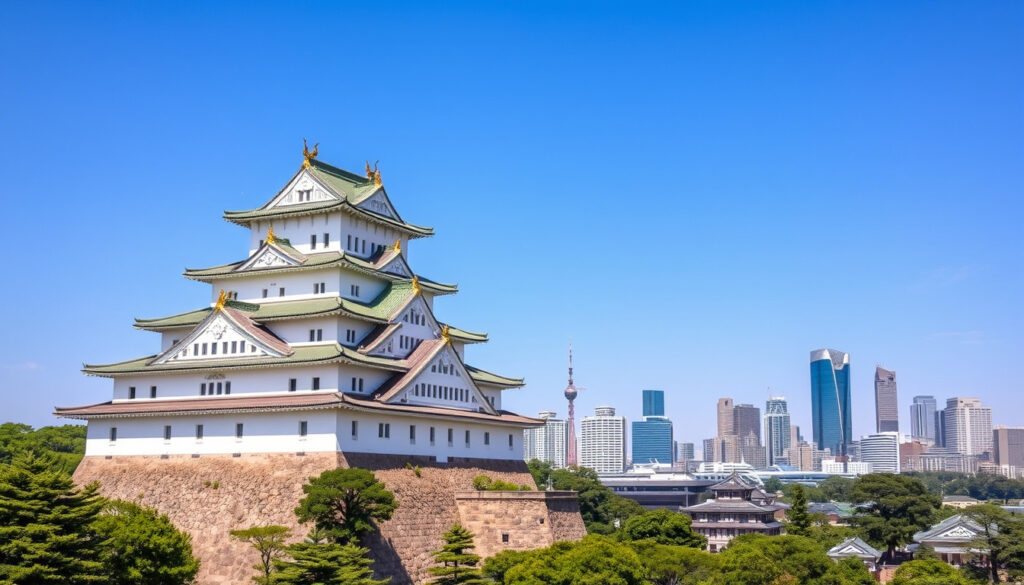
Nagoya Castle remains the visual anchor of the city. Unlike reconstructed castles in other destinations, Nagoya’s original tenshu (castle tower) survived the Pacific War, making it one of the few authentic castle towers remaining in Japan. The museum inside documents the Tokugawa clan’s control of the region and offers English-language guides for international visitors.
Industrial hub and Toyota origins
The Toyota Commemorative Museum is where industrial heritage meets family appeal. Visitors can secure tickets on arrival, and a dedicated kids’ play area keeps younger children engaged while parents explore exhibits on automobile manufacturing. The museum demonstrates how this region transformed from a textile center into the global headquarters of one of the world’s largest car manufacturers.
Historical sites and castles
Beyond the castle itself, the surrounding Furuwatari district preserves Edo-period architecture. Atsuta Jingu, established in the first century according to Shinto tradition, contains thousands of cultural properties and hosts seasonal festivals that draw Japanese visitors from across the country. The Nagoya Castle Hommachi grounds include traditional tea houses and gardens that bloom with cherry blossoms in spring.
Nagoya’s identity splits between its industrial muscle and historical gravitas. Families interested in either angle will find concrete exhibits and experiences—though those seeking pure temple aesthetics should factor in the trip to Atsuta Jingu, which requires a separate afternoon from the castle.
What’s worth seeing in Nagoya?
Tripadvisor’s 2026 rankings place the SCMAGLEV and Railway Park, Legoland Japan, and the Nagoya City Science Museum among the city’s top five kid activities. These three alone cover trains, bricks, and planetariums—enough variety to satisfy most children for multiple days. But the ranking doesn’t capture the full picture. Smaller attractions like Park Todagawa Kids Land and Osu Street offer entirely different experiences that budget-conscious families rate just as highly.
Nagoya Castle
Nagoya Castle’s main tower houses a museum with artifacts from the Oda, Tokugawa, and Matsudaira clans. The Tenshukaku tower itself survived wartime bombing, making its wooden beams and original construction genuine historical artifacts rather than modern replicas. Cherry blossom viewing in the castle grounds draws locals in spring, and the illuminated castle at night offers a different atmosphere from daytime visits. English-language audio guides are available at the entrance.
Osu Kannon and Sakae
The Osu district combines a working Buddhist temple with one of Nagoya’s most atmospheric shopping streets. Osu Kannon Temple anchors the area, while the surrounding arcade features everything from vintage video game shops to traditional confectioneries. Families report that the mix of noise, color, and food stalls keeps children engaged for hours. Second-hand shops sell everything from vintage toys to school uniforms, and arcades provide air-conditioned entertainment on rainy afternoons. The area sits within walking distance of the Sakae commercial district, where the Sky Boat Observation Deck offers panoramic views of the city.
Atsuta Jingu and Tokugawa Museum
Atsuta Jingu occupies a vast forested site that feels miles away from the urban center despite being a short subway ride from Sakae. The shrine complex includes multiple buildings, gardens, and walking paths that connect to the Tokugawa Museum. According to travel blogs at Life Tiny Miracles, the shrine’s cultural properties include nearly 4,000 art objects and ancient relics, though only a selection rotates on public display at any given time.
Osu Street and Sakae work best during daylight and early evening hours. Crime rates are low, but the area attracts pickpocket activity near crowded arcade entrances during peak weekend hours. Families should keep valuables secured and children close during busy periods.
What to do in Nagoya for a day
A single day in Nagoya can’t cover everything, but it can cover the essentials. Based on documented itineraries from family travel sources, here’s a compressed version that hits the high points without exhausting anyone under ten.
Morning at Nagoya Castle
Start at Nagoya Castle as it opens. The tenshu tower climb is steep but manageable for children aged five and up. Plan roughly 90 minutes for the castle museum, grounds, and nearby Hommachi garden walks. The on-site restaurant serves standard Japanese bento options—convenient but not remarkable. Families who prefer to fuel up beforehand should head to the station area first; Nagoya Station’s JR Gate Tower Hotel mall has multiple breakfast options ranging from convenience store sandwiches to sit-down noodle counters.
Afternoon in Sakae
Midday shifts to the Sakae district, where the Hisaya-Ohdori and Yaba-Cho markets offer lunch options. Try hitsumabushi—a grilled eel rice dish Nagoya claims as its own—at one of the local restaurants near Yaba-Cho. After lunch, the Nagoya City Science Museum sits a short walk away and features a giant planetarium with shows scheduled throughout the afternoon. According to YouTube travel content creators documenting the museum, the interactive science exhibits tend to hold children’s attention longer than the planetarium shows themselves.
Evening at Osu
The evening belongs to Osu Street. Food stalls activate as daylight fades, and the arcade atmosphere shifts to a more local crowd. Osu Kannon Temple stays open until roughly 5 PM, but the surrounding shopping arcade extends hours depending on individual shop policies. Families should budget at least two hours for Osu if they want to explore properly. The district’s proximity to the Osu-Kawabata Station on the Tsurumai Line makes the return trip to Nagoya Station straightforward.
What to do in Nagoya with kids
This is where Nagoya genuinely shines, and the research confirms it. Tripadvisor’s 2026 rankings place SCMAGLEV and Railway Park, Legoland Japan, and the Nagoya City Science Museum among the city’s top five kid activities, with the Port of Nagoya Aquarium and Higashiyama Zoo rounding out the official recommendations from Nagoya Info, a local tourism authority. Beyond the rankings, several lesser-known spots draw dedicated fan bases from family travel bloggers.
Family spots like Nagashima Resort
Nagashima Resort dominates the southern Aichi landscape with its combination of an amusement park, hot spring facilities, and shopping outlets. The resort operates multiple seasons with different event programming, and families report that a single day barely covers the main attractions. The associated Nagashima Spa Land water park opens seasonally during summer months. For winter visitors, the resort’s hot spring options provide indoor entertainment that doesn’t depend on weather conditions.
SCMAGLEV Railway Museum, operated by JR Central (the official railway authority for central Japan), features interactive exhibits on magnetic levitation technology alongside life-sized maglev train models. Families note the train operation simulations, which cost extra, and a dedicated play area with train sets for younger children. The museum ranks in Tripadvisor’s top five kid activities for a reason—it’s one of the few attractions in Nagoya where children can physically engage with the subject matter rather than just observe.
Winter and December activities
Winter transforms Nagoya’s attraction landscape. Nabana-No-Sato Flower Park, located in nearby Kuwana, draws families specifically for its Winter Illumination event. According to travel content from Life Tiny Miracles, the illumination experience ranks among Japan’s most spectacular, with millions of LED lights creating optical effects that children describe as “magical.” The park requires warm clothing even in December, and families should plan arrival for late afternoon to experience both daylight and illuminated grounds.
Shirakawa-go, the UNESCO World Heritage Site with nearly 300-year-old thatched-roof houses dating to the Edo period, operates day trips from Nagoya. Families report that independent visits are complicated with young children due to winter driving conditions, and tour operators (including KLOOK) offer packages that handle logistics. The snowy winter views of Shirakawa-go’s gassho-zukuri village architecture attract visitors who want to photograph traditional Japan without Kyoto’s crowds.
Night options
Nightlife for families in Nagoya skews toward food and observation rather than entertainment venues. Osu Street activates after dark with food stalls, and the Sakae district’s restaurants extend into evening hours. The Sky Boat Observation Deck in Sakae operates until roughly 10 PM and offers city views after dark that younger children often find more visually engaging than daytime panoramas. Families should note that most major attractions—Sea Life Nagoya included—close by 5:30 PM, which limits spontaneous evening plans.
Ghibli Park, located near Nagoya, continues expanding its ticket offerings for 2026. Advance booking remains mandatory through the official Ghibli Park website, and demand consistently exceeds supply for popular exhibition periods. Families who want to visit should plan ticket acquisition weeks in advance rather than hoping for same-day availability.
Is Nagoya worth visiting vs. nearby cities?
The comparison that matters most for most families isn’t Nagoya versus Tokyo or Kyoto—it’s Nagoya versus the direct Shinkansen route that bypasses it entirely. Travelers coming from Tokyo heading to Kyoto can stop in Nagoya midway without adding significant travel time, making it a practical addition rather than a detour. The question becomes whether Nagoya offers enough to justify two or three nights rather than one.
Against Osaka, Nagoya loses on pure entertainment volume. Osaka’s Universal Studios, Dotonbori food scene, and Osaka Castle complex draw more visitors by sheer mass. But Osaka’s attractions also draw more visitors by sheer mass—which matters for families with young children who find crowds overwhelming. Nagoya offers a quieter alternative with sufficient variety to fill two or three full days without the sensory overload of Japan’s major tourist hubs.
Upsides
- Significantly lower crowd density at major attractions
- Practical location between Tokyo and Kyoto on Shinkansen routes
- Diverse attraction mix spanning history, industry, and family entertainment
- Lower overall trip costs compared to Osaka or Tokyo
- Well-documented family-friendly options from multiple travel blogger sources
Downsides
- Fewer world-famous attractions that casual Japan visitors recognize
- English-language support inconsistent across smaller attractions
- Winter weather limits outdoor activities without advance planning
- Many travelers treat it as a transit stop, which undervalues its potential
How to get around Nagoya
Nagoya’s public transit system centers on the Nagoya Subway, supplemented by the Meitetsu and JR lines that connect suburbs and nearby cities. Families using the Japan Rail Pass can travel on JR lines throughout the region without additional cost, though the Nagoya Subway requires separate payment. The Marunouchi, Higashiyama, and Tsurumai lines cover most major tourist areas, and single-ride tickets cost between 210 and 280 yen depending on distance.
Taxis remain a practical option for families of four or more, particularly when traveling with strollers or tired children. Short rides within central Nagoya typically cost between 700 and 1,200 yen. The Nagoya Sightseeing Bus offers organized routes covering key attractions, which families report as efficient for compressing multiple stops into a single afternoon.
How to plan a family itinerary in Nagoya
Documented itineraries from family travel sources suggest a framework that balances attraction types and manages energy levels across age groups. Here’s a planning approach grounded in actual family experiences rather than generic tourist suggestions.
Day one should combine Nagoya Castle in the morning with Osu Street in the afternoon and evening. This covers the city’s historical anchor and its most engaging commercial district without requiring significant transit. Families with children under seven should prioritize the Osu arcades and food stalls over extended castle museum time—the climb up the tenshu tower is steep and the museum’s English explanations require parental interpretation.
Day two works best at either Legoland Japan or the SCMAGLEV Railway Museum, depending on children’s ages and interests. Week to Weekend Substack documents that Legoland Japan suits children aged 2 to 10 particularly well, while older children often engage more deeply with the railway museum’s technical exhibits. Sea Life Nagoya sits adjacent to Legoland and closes at 5:30 PM—families should visit Legoland first and allocate remaining afternoon time to the aquarium.
Day three suits either a Takayama and Shirakawa-go day trip or a split between the Nagoya City Science Museum and nearby parks. The UNESCO village at Shirakawa-go offers winter photography opportunities that contrast sharply with Nagoya’s urban environment. Families with very young children should consider the science museum and local parks instead, as the mountain roads to Shirakawa-go can test children’s patience during longer travel segments.
Day four addresses the gap between major attractions: the Port of Nagoya Aquarium, Higashiyama Zoo, or the Toyota Commemorative Museum. The aquarium features dolphins, penguins, and whale sharks according to local tourism sources, while the zoo offers a more traditional outdoor experience that works well in moderate weather. The Toyota Museum’s hands-on exhibits including a wind tunnel and mini car driving require advance ticket planning according to travel bloggers at Dutch Dutch Goose.
“Legoland Japan really takes the cake with some seriously good activities.”
— Life Tiny Miracles (Travel Blogger)
“As a travel blogger who loves discovering hidden gems, SillySuitcase highly recommends Park Todagawa Kids Land for families.”
— Silly Suitcase (Travel Blogger)
“We fell in love with Nagoya almost immediately. It is such an underrated Japanese city filled with world-class attractions.”
— Life Tiny Miracles (Travel Blogger)
For families choosing between Nagoya and the direct tourist track through Tokyo and Kyoto, the decision point is straightforward: those prioritizing crowd avoidance, lower costs, and a more authentic local feel will find Nagoya rewarding. Those who want maximum famous attractions and don’t mind competition for space should continue to Osaka. The middle path—stopping in Nagoya between Tokyo and Kyoto—captures both, and the Shinkansen timing makes it practical without significant schedule disruption.
How to get around Nagoya?
Nagoya’s transit system centers on the Nagoya Subway, supplemented by JR and Meitetsu lines. Families with Japan Rail Passes can use JR routes without extra cost. The subway covers most tourist areas with single rides between 210-280 yen. Taxis work well for groups of four or more, typically running 700-1,200 yen for short central trips. The Nagoya Sightseeing Bus offers organized routes for families who prefer not to navigate transit independently.
Is Nagoya safe for tourists?
Nagoya maintains Japan’s overall low crime rate. Violent crime against tourists is rare. The main concern is petty theft—pickpocket activity near crowded Osu arcade entrances during weekends, and minor scams targeting tourists at some electronics shops in the Sakae district. Standard precautions with valuables and awareness of pricing at smaller vendors cover most risk factors.
Best time to visit Nagoya?
Spring (March-May) offers cherry blossoms at Nagoya Castle and mild weather, though this period draws peak domestic tourism. Summer brings Nagashima Spa Land water park opening but intense heat and humidity. Fall (September-November) provides comfortable temperatures and November foliage views. Winter (December-February) suits families prioritizing Nabana-No-Sato’s Winter Illumination and snow day trips to Shirakawa-go, though outdoor attractions require warm clothing planning.
Nagoya vs nearby cities?
Nagoya offers less famous attractions than Kyoto or Osaka but significantly fewer crowds and lower costs. The Shinkansen places Nagoya roughly halfway between Tokyo and Kyoto, making it a practical stop rather than a detour. Families prioritizing famous landmarks should continue to Kyoto or Osaka. Those who want variety without competition for space will find Nagoya’s quieter attractions satisfying.
Free things to do in Nagoya?
Several attractions cost nothing or minimal fees. Osu Street and its temple area require no admission. Nagoya Castle’s exterior grounds and gardens are free to enter—only the tenshu tower museum requires a ticket. Atsuta Jingu’s forested paths and outer grounds are free, though the treasury building charges a small fee. Park Todagawa Kids Land charges no admission with only the monorail costing a small fee.
Nagoya food recommendations?
Hitsumabushi (grilled eel over rice) is Nagoya’s signature dish and worth trying at established restaurants in the Yaba-Cho area near Sakae. Tenmusu—akafuk rice balls with shrimp tempia—originated in Nagoya and makes an affordable snack. The Nagoya Station area offers diverse options from convenience store meals to department store basement food halls with prepared dishes. Osu Street’s evening food stalls specialize in regional snacks including skewered meats and sweet grilled mochi.
Day trips from Nagoya?
Multiple day trip options suit families. Takayama and Shirakawa-go offer a UNESCO World Heritage village with 300-year-old thatched-roof houses and snow photography in winter—tour operators like KLOOK handle logistics. Nagashima Resort combines an amusement park and hot springs about 30 minutes south by train. Ghibli Park requires advance booking but sits within an hour of Nagoya by public transit. Each option suits different family priorities: scenery, rides, or pop culture.
Related reading: Nagoya family itinerary with kids · 8-day family trip to Nagoya
thetokyochapter.com, youtube.com, thebackpackingfamily.com, dutchdutchgoose.com
Wrap up your Nagoya adventure by hunting for exclusive station omiyage amid the vibrant commercial hubs right at the terminal.
More related posts
 Daily Pay Job Singapore – Top Platforms and Rates
 SGD to MYR Google Rate Today: Live Conversion
 Does Green Tea Contain Caffeine? Amounts, Comparisons, Effects
 Part Time Packer Jobs in Singapore: Complete Guide 2026
 Convert Video to GIF: Best Free Online Tools for iPhone & Desktop
 EVA Air Flight Attendant Death: Cause and Investigation
 Sri Lanka Women vs India Women 2025: Schedule and Qualification
