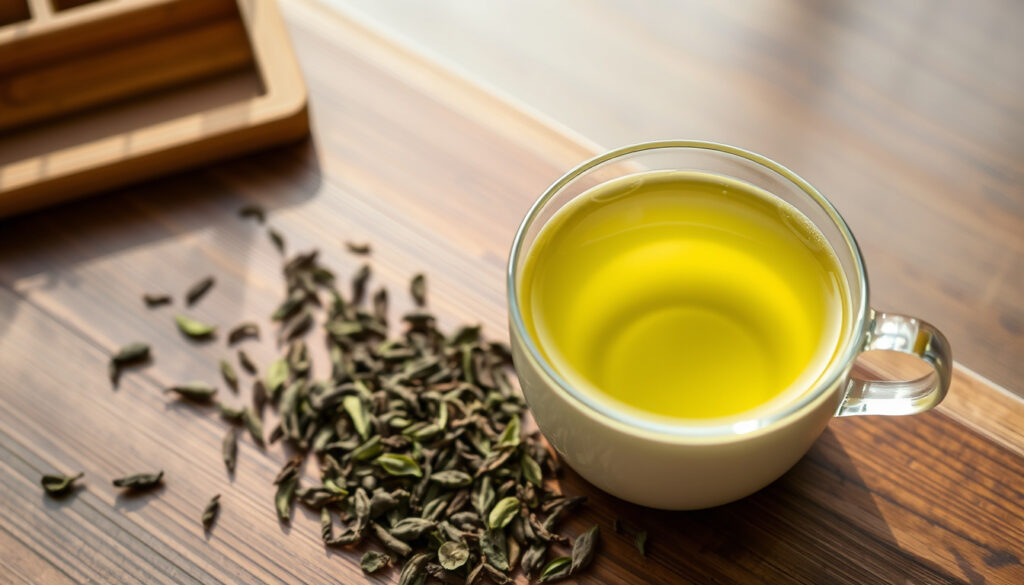
Does Green Tea Contain Caffeine? Amounts, Comparisons, Effects
If you’re staring at a cup of green tea wondering whether it will give you a jolt or a gentle lift, the short answer is yes — green tea contains caffeine, but typically less than half of a standard cup of coffee. This article breaks down the exact caffeine numbers, compares green tea with other popular drinks, and walks through the health considerations you should know.
Caffeine in 8 oz green tea: 30–50 mg ·
Caffeine in 8 oz coffee: 95 mg ·
Daily recommended max caffeine: 400 mg ·
Caffeine in matcha green tea (per cup): 70 mg
Quick snapshot
- Green tea: 30–50 mg per 8 oz (Healthline (nutrition resource))
- Coffee: 95 mg per 8 oz (Mayo Clinic (medical institution))
- Black tea: 47 mg per 8 oz (Healthline (nutrition resource))
- Matcha: 70 mg per cup (Healthline (nutrition resource))
- May improve alertness (NIH NCCIH (government research agency))
- Can cause insomnia if consumed late (NIH NCCIH (government research agency))
- May lower blood pressure (Mayo Clinic (medical institution))
- Interferes with iron absorption (Healthline (nutrition resource))
- Pregnant women (limit caffeine) (U.S. FDA (regulatory authority))
- People with anxiety disorders (NIH NCCIH (government research agency))
- Those with iron deficiency (Healthline (nutrition resource))
- Individuals on blood thinners (Healthline (nutrition resource))
- Herbal teas (chamomile, peppermint) (Mayo Clinic (medical institution))
- Rooibos tea (Mayo Clinic (medical institution))
- Decaf green tea (trace caffeine) (Mayo Clinic (medical institution))
- Fruit infusions (Mayo Clinic (medical institution))
The key facts about caffeine in green tea and related beverages are summarized in the table below.
| Label | Value |
|---|---|
| Caffeine per 8 oz green tea | 30–50 mg |
| Caffeine per 8 oz coffee | 95 mg |
| Daily caffeine limit (FDA) | 400 mg |
| Caffeine in matcha (per cup) | 70 mg |
| Caffeine in black tea (8 oz) | 47 mg |
How much caffeine is in green tea compared to coffee?
The simplest answer: green tea contains caffeine, but about one-third to one-half the amount of a typical coffee serving. A standard 8-ounce cup of brewed green tea delivers 30–50 mg of caffeine, according to Healthline (nutrition resource). Meanwhile, a comparable cup of brewed coffee contains roughly 95 mg, as noted by the Mayo Clinic (medical institution).
Caffeine content in green tea
- The U.S. FDA (regulatory authority) lists brewed green tea at about 28 mg per 8 fluid ounces.
- The Mayo Clinic (medical institution) reports a range of 25–29 mg per 8-ounce serving.
- Steeping time, water temperature, and leaf quality all affect the final caffeine amount, as noted by Healthline (nutrition resource).
Caffeine content in coffee
- Brewed coffee from the Mayo Clinic (medical institution) measures about 96 mg per 8-ounce cup.
- Espresso delivers roughly 63 mg per 1-ounce shot, according to the U.S. FDA (regulatory authority).
Green tea vs black tea caffeine
- Black tea typically contains more caffeine than green tea, though both vary by product. Healthline (nutrition resource) reports black tea at about 47 mg per 8-ounce cup.
- Many factors affect the caffeine content in all tea types, including leaf origin and brewing method, as discussed by Tea Trolley (tea specialist).
Several beverages, one clear pattern: green tea sits in the middle range — lower than coffee or black tea, but higher than most herbal infusions.
For anyone trying to cut caffeine gradually, green tea is a practical replacement. A coffee drinker switching to two cups of green tea daily goes from roughly 190 mg to 70 mg — a 60% reduction — while still getting a measurable alertness boost.
What are the side effects of drinking green tea?
Even though green tea is widely considered a healthy beverage, its caffeine content can produce side effects in certain people. The NIH NCCIH (government research agency) notes that caffeine can cause jitters, anxiety, sleep disruption, and a faster heart rate.
Digestive issues
- Green tea contains tannins, which can cause stomach upset if consumed on an empty stomach, as reported by Healthline (nutrition resource).
- Moderate consumption (2–3 cups daily) usually doesn’t cause significant digestive problems in most people.
Insomnia and anxiety
- Because caffeine is a stimulant, drinking green tea late in the day may disrupt sleep, per the NIH NCCIH (government research agency).
- People with anxiety disorders may find that even small amounts of caffeine, such as 50–100 mg, can worsen symptoms.
Iron absorption interference
- Green tea can reduce iron absorption, especially the non-heme iron found in plant foods, according to Healthline (nutrition resource).
- The effect is more pronounced when drinking tea with meals. Drinking between meals may help mitigate this.
Blood pressure effects
- Some studies suggest green tea may slightly lower blood pressure over time, though caffeine can cause short-term spikes in some individuals, as discussed by the Mayo Clinic (medical institution).
- The effect varies widely by individual sensitivity.
The catch: green tea’s side effects are dose-dependent. Most people tolerate 2–3 cups without issues, but crossing that threshold — or having an empty stomach — shifts the balance from benefit to risk.
Green tea offers antioxidants and a mild energy lift, but the same tannins that provide health benefits can interfere with iron absorption. Those with diagnosed deficiency face a real trade-off: sip between meals, or risk reducing iron uptake by as much as 60% when consumed with food.
Can green tea keep you awake?
Yes — green tea’s caffeine content is enough to promote alertness. The NIH NCCIH (government research agency) explains that caffeine is absorbed quickly, reaching peak blood levels within 30–60 minutes after drinking.
Caffeine’s role in alertness
- Caffeine blocks adenosine receptors, which prevents drowsiness and increases neuronal activity.
- Green tea typically provides 30–50 mg per cup, enough for a measurable but mild energy lift for most adults.
How much green tea to affect sleep
- Drinking even one cup of green tea within a few hours of bedtime may disrupt sleep onset or quality for sensitive individuals.
- Matcha green tea, with about 70 mg per cup from Healthline (nutrition resource), has a stronger effect than brewed green tea.
Individual sensitivity
- The U.S. FDA (regulatory authority) notes that caffeine sensitivity varies widely — some people feel alert after 20 mg, while others need 100 mg or more for the same effect.
- Genetics, body weight, and habitual caffeine consumption all influence sensitivity.
What this means: someone who has trouble sleeping should consider stopping green tea consumption by early afternoon, especially if using matcha or steeping tea longer than average.
Who must not drink green tea?
Certain groups may need to limit or avoid green tea entirely due to its caffeine content or other compounds. The U.S. FDA (regulatory authority) provides the 400 mg per day general guideline, but some people need more specific restrictions.
People with caffeine sensitivity
- Those prone to anxiety, panic attacks, or heart palpitations often react to even small amounts of caffeine.
- The NIH NCCIH (government research agency) notes that side effects can include increased heart rate, restlessness, and sleep disruption.
Pregnant and breastfeeding women
- Pregnant women should limit caffeine to 200 mg per day, per the U.S. FDA (regulatory authority).
- That means roughly four 8-ounce cups of green tea, but many women set a stricter limit for safety.
People with iron deficiency
- Green tea’s tannins bind to non-heme iron, reducing absorption. Healthline (nutrition resource) suggests drinking tea between meals rather than with iron-rich foods.
People with certain medical conditions
- Those on blood thinners such as warfarin should consult a doctor, as green tea contains vitamin K, which may interfere with the medication.
- People with severe reflux or stomach ulcers may find green tea aggravates symptoms due to its acidity and caffeine.
The pattern: each contraindication comes down to either caffeine dose or tannin content. For most people, moderation resolves the issue, but for specific groups, even moderate amounts create problems.
What happens if you drink green tea every day?
Daily green tea consumption is common and widely studied for both benefits and risks. The Mayo Clinic (medical institution) identifies moderate consumption of 2–3 cups as generally safe for healthy adults.
Potential health benefits
- Regular green tea intake is associated with lower risk of heart disease, stroke, and certain cancers, based on population studies cited by Healthline (nutrition resource).
- The antioxidants in green tea, including epigallocatechin gallate (EGCG), are considered the primary drivers of these effects.
Risks of excessive consumption
- Drinking more than 5 cups of green tea daily may increase risk of side effects like stomach upset, insomnia, and, in rare cases, liver strain from high EGCG intake.
- The NIH NCCIH (government research agency) notes that caffeine intoxication can occur at high doses (over 500 mg per day), although this is rare from tea alone.
Recommended daily intake
- Moderate consumption: 2–3 cups of green tea per day, which provides 60–150 mg of caffeine.
- Staying within the U.S. FDA (regulatory authority) guideline of 400 mg daily caffeine from all sources allows room for other caffeinated drinks.
Why this matters: the difference between healthy and harmful is purely about volume. Two cups daily is linked to longevity benefits; six cups pushes toward side-effect territory. For the average person, the sweet spot is 2–3 cups, spaced throughout the day.
A moderate daily green tea habit fits well within caffeine limits for most adults. The choice between brewed green tea and matcha matters: matcha’s higher caffeine concentration means it counts differently toward the daily limit.
Clarity check: confirmed facts vs. what’s still unclear
Confirmed facts
- Green tea contains caffeine (30–50 mg per 8 oz cup) (Healthline (nutrition resource))
- Caffeine content varies by brand, brewing time, and leaf quality (Healthline (nutrition resource))
- Excessive caffeine intake can cause side effects (NIH NCCIH (government research agency))
What’s unclear
- Exact long-term health benefits of daily green tea consumption
- Whether green tea’s caffeine affects blood pressure consistently across individuals
Expert perspectives on green tea and caffeine
“Green tea’s caffeine content typically ranges from 30–50 mg per 8-ounce cup, though this varies significantly based on brewing method and leaf grade.”
— Healthline (nutrition resource) medical review
“Green tea contains on average 33 mg of caffeine per cup, placing it between herbal teas and coffee in terms of stimulant effect.”
“Caffeine in green tea can cause side effects like stomach upset and insomnia, especially when consumed in large amounts or by sensitive individuals.”
The evidence consistently shows that green tea offers a moderate caffeine dose — enough for alertness but unlikely to produce the jitters associated with coffee. For those managing caffeine intake, the decision comes down to personal tolerance and health status.
For the average reader managing their daily energy levels, the choice is clear: green tea provides a moderate caffeine alternative to coffee, with 30–50 mg per cup versus coffee’s 95 mg. Anyone sensitive to caffeine should limit consumption to morning hours and stick to 2–3 cups maximum, or explore caffeine-free herbal alternatives.
truecitrus.com, natracure.com, nepaliteatraders.com, sugimotousa.com
For a detailed breakdown of green tea caffeine amounts per cup and how they compare to other beverages, our sister site provides a thorough analysis.
Frequently asked questions
Does green tea have more caffeine than black tea?
No, black tea typically contains more caffeine than green tea. Healthline reports black tea at about 47 mg per 8-ounce cup, while green tea ranges from 30–50 mg. Both vary by brand and brewing method.
Is decaf green tea completely caffeine-free?
No, decaffeinated green tea still contains trace amounts of caffeine — generally 2–5 mg per cup. The U.S. FDA (regulatory authority) notes that decaf teas are not entirely caffeine-free.
Can I drink green tea before bed?
It’s better to avoid it close to bedtime. Even 30–50 mg of caffeine can disrupt sleep for sensitive individuals. Drinking your last cup by early afternoon is a safer choice.
How much green tea is safe to drink per day?
Most health experts agree that 2–3 cups (providing 60–150 mg caffeine) is moderate and safe for healthy adults, staying well within the U.S. FDA (regulatory authority) daily limit of 400 mg.
Does green tea caffeine affect blood pressure?
Green tea may slightly lower blood pressure over time, but caffeine can cause short-term increases in some people. The effect varies by individual sensitivity, as noted by the Mayo Clinic (medical institution).
What is the best time to drink green tea for energy?
Morning or early afternoon is best for energy benefits. Avoid drinking green tea within 4–6 hours of bedtime to prevent sleep disruption.
Does organic green tea have less caffeine?
No, organic certification does not affect caffeine content. The caffeine level depends on leaf type, growing conditions, and brewing method, not organic farming practices.
More related posts
 Atlético Madrid vs Real Madrid: Record, Stats & 5-2 Win
 Exchange Rate Singapore to India: SGD to INR Guide
 Hong Kong Disneyland Hotel: Compare 3 Disney Hotels
 H&M Singapore: Complete Store and Price Guide
 Ahn Jae-hyun – Career Dramas and Divorce Facts
 Simplicité by Fresh Fruits Lab: Menu, Halal, Pet-Friendly Guide
 Total Cholesterol Normal Range – By Age, Gender and Guidelines
