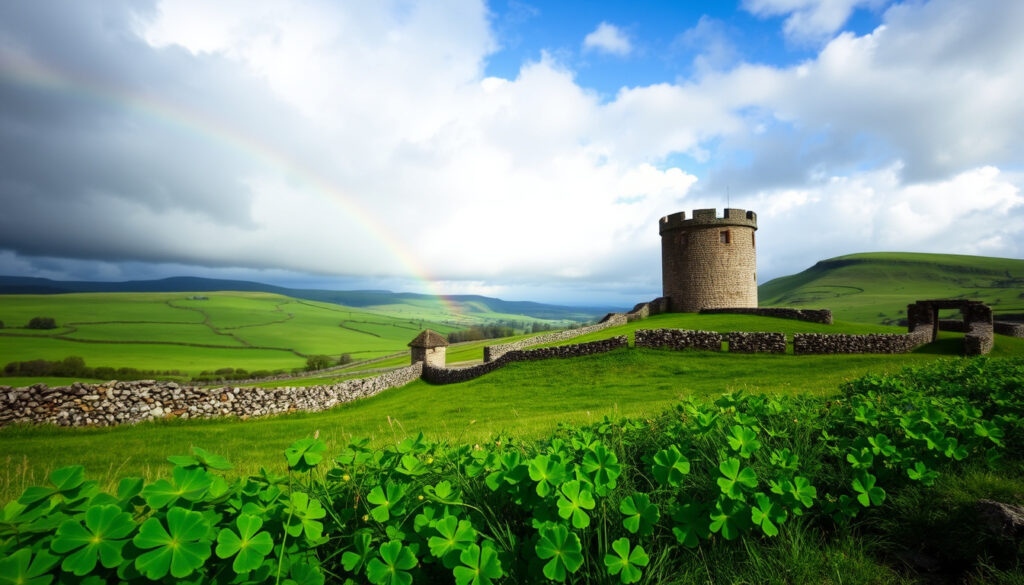
St. Patrick’s Day: Origins, Traditions, and Global Celebrations
Every March 17, streets around the world go green—but the day wasn’t always about beer, parades, and leprechauns. Saint Patrick’s Day began as a quiet religious feast honoring the patron saint of Ireland, and its journey into a global celebration is a story of migration, adaptation, and a little bit of myth.
Date celebrated: March 17 annually ·
Commemorates death of: Saint Patrick (c. 385–c. 461) ·
First modern parade (US): New York City, 1762 ·
Largest parade attendance (Dublin 2025 estimate): 500,000 spectators ·
Percentage of Irish who celebrate abroad (diaspora): 70 million worldwide claim Irish heritage
Quick snapshot
- St. Patrick existed and was a missionary bishop in Ireland (Britannica)
- March 17 marks his traditional death date (Britannica)
- First New York parade was in 1762 (Smithsonian National Portrait Gallery)
- Shamrock is a national symbol linked to him (Britannica)
- Exact date of St. Patrick’s birth (Britannica)
- Whether he actually used a shamrock to explain the Trinity (Britannica)
- Precise number of attendees at early parades (Smithsonian National Portrait Gallery)
- Whether St. Patrick actually banished snakes from Ireland (the story is symbolic) (Insight Vacations)
- c. 385: Saint Patrick born in Roman Britain (Britannica)
- 1762: First recorded parade in New York (Smithsonian National Portrait Gallery)
- 1962: Chicago begins dyeing river green (National Geographic)
- Dublin St. Patrick’s Festival runs March 14–17, 2026 (Britannica)
- Global celebrations continue to shift toward secular, cultural events (National Geographic)
Six key facts, one pattern: the holiday’s timeline stretches from Roman Britain to medieval Ireland to modern cities, revealing how a religious feast became a global phenomenon.
| Fact | Value |
|---|---|
| Saint Patrick’s birth year | c. 385 AD (Roman Britain) |
| Death year | c. 461 AD (Saul, Ireland) |
| First US parade year | 1762 (New York City) |
| First official Irish parade | 1931 (Dublin) |
| Color traditionally associated with St Patrick | Blue (not green) |
| Number of US cities with parades | Over 100 annually |
Why do we celebrate St Patrick’s Day?
Who was Saint Patrick?
- Born in Roman Britain around 385 AD, Patrick was captured by Irish raiders at age 16 and enslaved for six years (Britannica).
- He escaped, became a cleric, and returned to Ireland as a missionary bishop, credited with spreading Christianity across the island (Britannica).
- Two short Latin works survive from his hand: the Confessio and the Letter to the Soldiers of Coroticus (Britannica).
The implication: Patrick’s own writings show a man grappling with his past captivity and his mission, far from the jolly icon of modern greeting cards.
Patrick’s personal story—a reluctant slave turned evangelist—is the real engine behind a holiday that later generations turned into a party. Without his grit, there would be no green beer.
What is the religious origin of March 17?
- March 17 is the traditional date of Patrick’s death, around 461 AD (Britannica).
- The Catholic Church established March 17 as a feast day in the 17th century, following the rise of devotion to Patrick in medieval Ireland (Britannica).
- For centuries, the day was a quiet holy day of obligation in Ireland, marked by church services and family gatherings (Britannica).
The pattern: a solemn religious observance slowly gave way to public celebration as Irish identity grew more entwined with national pride.
Is St Patrick’s Day celebrated in Ireland?
Why do some say St Patrick’s Day is not Irish?
- A common misconception holds that St. Patrick’s Day is an American invention, but Ireland has observed the feast for centuries (Britannica).
- The idea that “it’s not Irish” stems from the heavy commercialization and parade culture developed by the Irish diaspora in the US (Smithsonian National Portrait Gallery).
- In fact, St. Patrick’s Day has been a public holiday in Ireland since 1903 (Britannica).
The catch: the global image of green beer and leprechauns is largely an export of Irish immigrants, not a native Irish tradition—but the day itself is deeply rooted in Ireland.
How has the celebration changed in Ireland over time?
- Up until the 1970s, pubs were closed on March 17 in Ireland, and the day remained primarily religious (Britannica).
- The first official Dublin parade was held in 1931, but large-scale festivals only took off in the 1990s (Britannica).
- Today, the Dublin St. Patrick’s Festival is a five-day event drawing hundreds of thousands of visitors (Britannica).
What this means: modern Ireland has embraced the globalized version of the holiday while keeping its own traditions—shamrocks on lapels, family dinners, and a renewed focus on Irish language and culture.
What is the history of Saint Patrick and St Patrick’s Day in America?
When did the first US parade take place?
- The first recorded St. Patrick’s Day parade in the US was held in New York City in 1762, organized by Irish soldiers serving in the British army (Smithsonian National Portrait Gallery).
- By the mid-19th century, parades were held in Boston, Philadelphia, Chicago, and other cities with large Irish populations (Smithsonian National Portrait Gallery).
- Today, over 100 US cities host annual parades, making it the most widespread public expression of the holiday outside Ireland (National Geographic).
How did Irish immigrants shape the holiday?
- Irish immigrants in the 19th century used St. Patrick’s Day as a way to assert cultural pride and counter negative stereotypes (Smithsonian National Portrait Gallery).
- The parades became displays of political strength and community solidarity, especially in cities like New York and Boston (Smithsonian National Portrait Gallery).
- Many now-iconic elements—corned beef and cabbage, green beer, “Kiss Me I’m Irish” buttons—originated in the US, not Ireland (Britannica).
The pattern: the diaspora turned a holy day into a statement of identity, and that version of the holiday eventually traveled back to influence celebrations in Ireland itself.
“Irish-American celebrations helped shape the modern holiday’s public parade culture.”
— Smithsonian National Portrait Gallery (source)
What does kiss me I’m Irish mean?
Where does the tradition come from?
- The phrase “Kiss Me I’m Irish” is a modern marketing invention, popularized in the 20th century on buttons and merchandise (Britannica).
- It has no ancient Irish origin—it plays on the stereotype of Irish friendliness and the luck of the Irish.
- The tradition of kissing someone claiming Irishness on St. Patrick’s Day is purely commercial, boosted by tourism campaigns and souvenir sales (Britannica).
Is it linked to the Blarney Stone?
- The Blarney Stone legend (kissing the stone for eloquence) is a separate Irish tradition, sometimes conflated with St. Patrick’s Day marketing (Britannica).
- No historical connection exists between the Blarney Stone and the “Kiss Me” phrase—it’s a coincidence of themes.
The trade-off: the phrase is harmless fun, but it reinforces a simplified, tourist-friendly version of Irish identity that has little to do with actual Irish culture.
For visitors to Ireland, expecting “Kiss Me I’m Irish” to be a local tradition will lead to disappointment. The real welcome is a pint in a Dublin pub and a conversation about hurling, not a button.
The phrase has little to do with authentic Irish culture, but it persists as a playful global tradition.
What are the symbols of St Patrick’s Day?
Why is the shamrock a symbol?
- According to tradition, St. Patrick used the three-leaf shamrock to explain the Christian Trinity (Britannica).
- The shamrock became a symbol of Irish pride during the 18th and 19th centuries, especially in opposition to British rule (Heritage Museum of Orange County).
- It remains the most recognized emblem of St. Patrick’s Day, worn on lapels in Ireland and displayed worldwide.
What does the leprechaun represent?
- Leprechauns come from Irish folklore as solitary fairy shoemakers, not originally associated with St. Patrick (The Irish Jewelry Company).
- They were adopted into St. Patrick’s Day imagery by 20th-century marketing, especially in the US (The Irish Jewelry Company).
- Modern leprechaun caricatures are largely an American invention, far from the mischievous but not-jolly figure of Irish tales.
What color is bad luck on St Patrick’s Day?
- Green is the lucky color; wearing it supposedly makes you invisible to leprechauns who would pinch you (National Geographic Kids).
- Historically, the color associated with St. Patrick was blue, not green (Heritage Museum of Orange County).
- Green only became dominant in the 18th century as the color of Irish nationalism. Wearing no green on March 17 is considered bad luck only in the folk tradition.
The pattern: symbols of St. Patrick’s Day are a blend of genuine historical emblems (shamrock, harp) and later commercial additions (leprechauns, green beer). Knowing the difference helps separate myth from meaning.
Timeline: St. Patrick’s Day from Roman Britain to global festival
- c. 385: Saint Patrick born in Roman Britain (Britannica)
- c. 461: Saint Patrick dies on March 17 in Saul, Ireland (Britannica)
- 17th century: Catholic Church establishes March 17 as feast day (Britannica)
- 1762: First recorded St. Patrick’s Day parade in New York City (Smithsonian National Portrait Gallery)
- 1903: St Patrick’s Day becomes a public holiday in Ireland (Britannica)
- 1931: First official Dublin parade held (Britannica)
- 1962: Chicago begins dyeing river green (National Geographic)
- 2026: Dublin St Patrick’s Festival runs March 14–17 (Britannica)
This timeline shows how the holiday evolved from a religious observance to a global cultural phenomenon.
What we know and what we don’t
Confirmed facts
- St. Patrick existed and was a missionary bishop in Ireland (Britannica)
- March 17 marks his traditional death date (Britannica)
- New York parade began in 1762 (Smithsonian National Portrait Gallery)
- Shamrock is a national symbol linked to him (Britannica)
What’s unclear
- Exact date of St. Patrick’s birth (Britannica)
- Whether he actually used a shamrock to explain the Trinity (Britannica)
- Precise number of attendees at early parades (Smithsonian National Portrait Gallery)
- Whether St. Patrick actually banished snakes from Ireland (understood as symbolic) (Insight Vacations)
In their own words: key voices on St. Patrick’s Day
“I, Patrick, a sinner, the most rustic and the least of all the faithful, was taken captive… and the Lord opened my mind to an awareness of my unbelief.”
— Saint Patrick’s Confessio (5th-century text) (Britannica)
“Irish-American celebrations helped shape the modern holiday’s public parade culture.”
— Smithsonian National Portrait Gallery (source)
The modern St. Patrick’s Day still carries traces of its religious origins—a day commemorating a man who wrote about slavery and faith—but the parade floats and green rivers have long since taken center stage. For the millions of Irish descendants worldwide, as well as the millions more who join in for a single day, the holiday offers a rare moment when a small island’s saint becomes a global symbol of identity, hospitality, and good craic.
For anyone planning to celebrate in Dublin in 2026, the choice is clear: skip the green beer gimmicks, find a traditional session of Irish music, and raise a glass to the real Patrick—the escaped slave who came back to change a country.
tartanvibesclothing.com, 99designs.com, thehotelwashington.com, fields.ie, facebook.com, youtube.com
For those planning ahead, St. Patricks Day 2025 details offers specific information on the 2025 date and parade schedules.
Frequently asked questions
Why is St Patrick’s Day associated with green?
Green became the color of Irish nationalism in the 18th century, replacing the older association with blue. The folklore about avoiding leprechaun pinches is a later addition (Britannica).
Do people in Ireland really drink green beer?
No, green beer is an American invention largely absent from Irish pubs on St. Patrick’s Day. Irish drinkers prefer stout, lager, or ale—undyed.
What is the difference between St Patrick’s Day and St Patrick’s Festival?
St Patrick’s Day is the actual holiday on March 17; the St Patrick’s Festival in Dublin runs for several days around that date, with parades, concerts, and cultural events (Britannica).
What is a shamrock and why is it worn?
The shamrock is a three-leaf clover. According to tradition, St. Patrick used it to illustrate the Christian Trinity. It is worn on lapels in Ireland and displayed globally as a symbol of Irish heritage (Britannica).
Why are there so many St Patrick’s Day parades in the US?
Irish immigrants in the 19th century used parades to assert cultural identity and counter discrimination. Today, over 100 US cities host parades, making them the most visible public celebration (Smithsonian National Portrait Gallery).
Is St Patrick’s Day a religious holiday?
Yes, it is a feast day in the Catholic Church and a public holiday in Ireland. However, in many countries it is observed as a secular celebration of Irish culture. The religious significance remains important to practicing Catholics (Britannica).
How is St Patrick’s Day celebrated in the UK?
In the UK, St Patrick’s Day is celebrated with parades in cities with large Irish communities (e.g., London, Birmingham, Manchester). Northern Ireland has a public holiday, but celebrations there also include political and cultural dimensions (Britannica).
More related posts
 MRT Blue Line Map: Stops, PDF Download & Route Guide
 Autobahn Rent A Car Operation Su pended: What’ Next
 Shangri-La The Line: Prices, Dress Code & 55th Anniversary
 Japan Earthquake Tsunami Warning 2026: Latest Updates & FAQ
 Kolkata Knight Riders vs Mumbai Indians Match Scorecard 2026
 Safety Coordinator Jobs Singapore: Salary, Requirements, Guide
 Paya Lebar Sivan Temple – Visitor Guide and History
 Kwek Family CDL Board Dispute: Key Events and Players
