High Potassium Foods to Avoid – Guide for CKD Patients
Managing potassium intake becomes critical when kidneys lose their ability to filter this essential mineral effectively. For patients with chronic kidney disease or those at risk of hyperkalemia, consuming High Potassium Foods to Avoid can trigger dangerous cardiac events, including irregular heart rhythms and potential arrest. Medical guidelines generally classify foods containing more than 200 milligrams of potassium per serving as high-potassium items requiring restriction or careful portion control.
General adult populations typically require between 2,600 and 3,400 milligrams of potassium daily for optimal muscle and nerve function. However, individuals with compromised renal function often need significantly lower targets, determined through consultation with nephrologists and renal dietitians. The challenge lies not only in identifying obvious sources like bananas and oranges but also in recognizing hidden potassium within processed foods, dairy products, and whole grains.
This guide examines specific foods exceeding the 200-milligram threshold per serving, categorized by food group, with measurable potassium content and practical low-potassium substitutions. All nutritional data derives from clinical recommendations provided by UCLA Health, the National Kidney Foundation, and specialized renal care providers.
What Are High Potassium Foods to Avoid?
High-potassium foods span multiple categories, from fresh produce to dairy and legumes. Clinical sources emphasize that portion size dramatically impacts total potassium load, meaning even moderate-potassium foods can become problematic when consumed in large quantities.
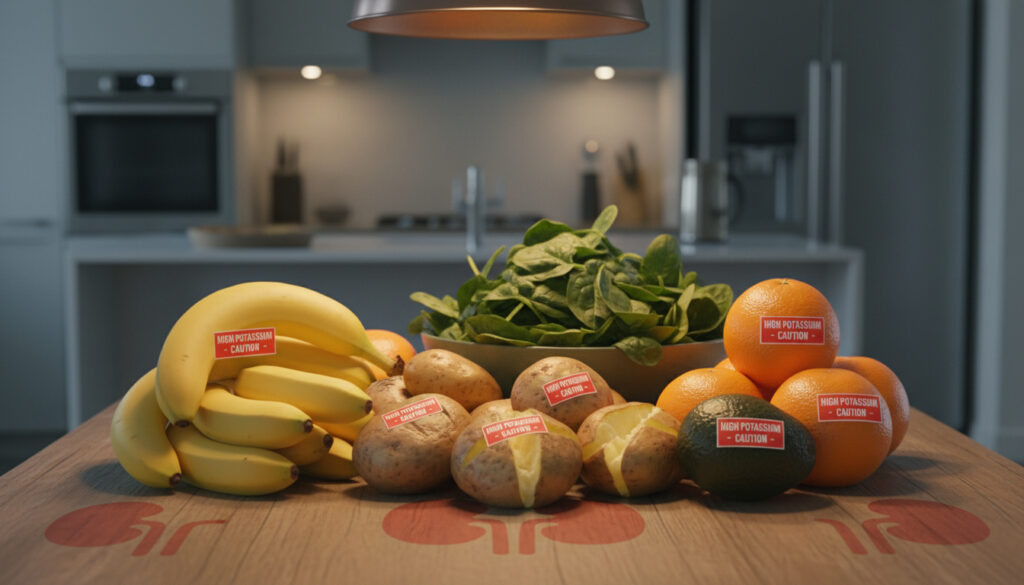
Bananas, oranges, avocados, dried fruits
Potatoes, tomatoes, spinach, winter squashes
Milk, yogurt, almonds, peanut butter
>200mg per serving typically requires restriction
Key Insights on Managing High Potassium Through Diet
- A medium baked potato contains approximately 610 milligrams of potassium, nearly exceeding a full meal’s allowance for restrictive diets.
- Leaching vegetables through peeling, cubing, boiling, and draining can reduce potassium content by 30-50 percent.
- One-half cup of cooked spinach delivers roughly 420 milligrams of potassium, comparable to a small banana.
- Dairy products present significant hidden potassium, with one cup of milk containing 350-400 milligrams.
- Dried fruits concentrate potassium; half a cup of raisins contains substantially more than the same volume of grapes.
- CKD patients typically require intake below the standard 2,600-3,400 mg/day recommendation.
- Regular monitoring through blood tests remains essential, as symptoms of hyperkalemia often remain silent until dangerous levels occur.
Common High-Potassium Foods and Alternatives
| Food | Portion | Potassium (mg) | Low-K Alternative |
|---|---|---|---|
| Banana | 1/2 whole | ~211 | Apple (1 medium) |
| Potato (baked) | 1 medium | ~610 | Cauliflower (1/2 cup) |
| Spinach (cooked) | 1/2 cup | ~420 | Cabbage (1/2 cup) |
| Avocado | 1/4 whole | ~250 | Berries (1/2 cup) |
| Tomato (raw) | 1/2 cup | ~200+ | Cucumber (1/2 cup) |
| Orange | 1 medium | ~237 | Grapes (1/2 cup) |
| Milk | 1 cup | ~350-400 | Rice milk (unsweetened) |
| Lentils (cooked) | 1/2 cup | ~365 | Green beans (1/2 cup) |
| Almonds | 1 oz | ~200 | None specified (avoid) |
| Yogurt | 1/2 cup | ~200-250 | Lower-fat moderate portions |
Which Fruits Are Highest in Potassium?
Fruits represent some of the most concentrated sources of dietary potassium, with several common varieties exceeding the clinical threshold in standard serving sizes. Bananas, perhaps the most recognizable example, deliver approximately 422 milligrams per medium fruit, while oranges provide around 237 milligrams each. Dried fruits present particular concerns due to dehydration concentrating minerals; a half-cup of raisins contains over 600 milligrams, and dried apricots, dates, and prunes similarly pack substantial potassium into small volumes.
Understanding the Impact of Portion Sizes
The relationship between portion size and potassium load is not always linear, making precise measurement essential for renal dietary management. A small banana contains roughly 360 milligrams, while a large one approaches 500 milligrams. Similarly, half an avocado delivers about 485 milligrams, demonstrating that even healthful foods require careful quantification. Patients measuring portions by volume rather than weight may inadvertently consume excess potassium, particularly with dense foods like dried fruits or compacted vegetables.
Hidden Sources in Processed and Restaurant Foods
Beyond whole foods, potassium lurks in unexpected places within the modern food supply. Salt substitutes frequently replace sodium chloride with potassium chloride, potentially adding hundreds of milligrams per teaspoon. Processed meats, canned soups, and fast food items often contain potassium-based additives used as preservatives or flavor enhancers. Restaurant meals, particularly those featuring tomato-based sauces, cheese, or vegetable medleys, can deliver potassium loads exceeding 1,000 milligrams in a single entree, complicating dietary adherence for patients with strict restrictions.
Clinical Perspectives on Dietary Management
“Patients often focus exclusively on avoiding bananas and oranges while overlooking dairy products and legumes that contribute equally to their daily potassium burden. Comprehensive dietary counseling must address these hidden sources to prevent hyperkalemic episodes.”
— Nephrology Dietary Practice Guidelines
Renal dietitians emphasize that individualized plans outweigh rigid elimination lists, accounting for patient preferences, cultural food practices, and concurrent medical conditions such as diabetes or hypertension. The goal shifts from strict avoidance to controlled integration, allowing small portions of preferred higher-potassium foods within daily allowances while emphasizing lower-potassium alternatives for bulk consumption.
Summary of Key Recommendations
Effective potassium management requires vigilance across multiple food categories, recognizing that restriction levels vary by individual renal function and medical history. Patients should prioritize fresh low-potassium produce like apples, berries, cabbage, and cauliflower while limiting bananas, potatoes, tomatoes, and spinach to occasional small portions. Dairy consumption demands careful measurement, with alternatives like rice milk providing safer options. Regular laboratory monitoring, combined with structured dietary planning, enables patients to maintain nutritional adequacy while avoiding the cardiac risks associated with elevated serum potassium levels.
Frequently Asked Questions
Can I eat any high-potassium foods if I have kidney disease?
Portion-controlled consumption of higher-potassium foods may be permissible depending on individual lab results, medications, and residual kidney function. Working with a renal dietitian allows for personalized integration of small amounts of preferred foods while maintaining safe serum potassium levels.
Does cooking method really reduce potassium content?
Yes, leaching through specific preparation techniques significantly reduces potassium. Peeling vegetables, cutting into small cubes, boiling in excess water, and discarding the cooking liquid removes 30-50 percent of potassium content, though this method also reduces water-soluble vitamins.
Are salt substitutes safe for low-sodium diets?
No, most salt substitutes replace sodium with potassium chloride, making them dangerous for individuals requiring potassium restriction. Patients should avoid these products unless specifically approved by their nephrologist.
More related posts
 Lendlease Global Commercial REIT: Why It Dropped and What’s Next
 Mumbai Indians vs Royal Challengers Bengaluru 2026 Scorecard
 Hong Kong Disneyland Hotel: Compare 3 Disney Hotels
 Memorandum and Articles of Association: Definition & Difference
 IPL Hair Removal Singapore: Cost, Effectiveness & Downsides
 How to Delete a Page in Word: Step-by-Step Guide
 Kwek Family CDL Board Dispute: Key Events and Players
