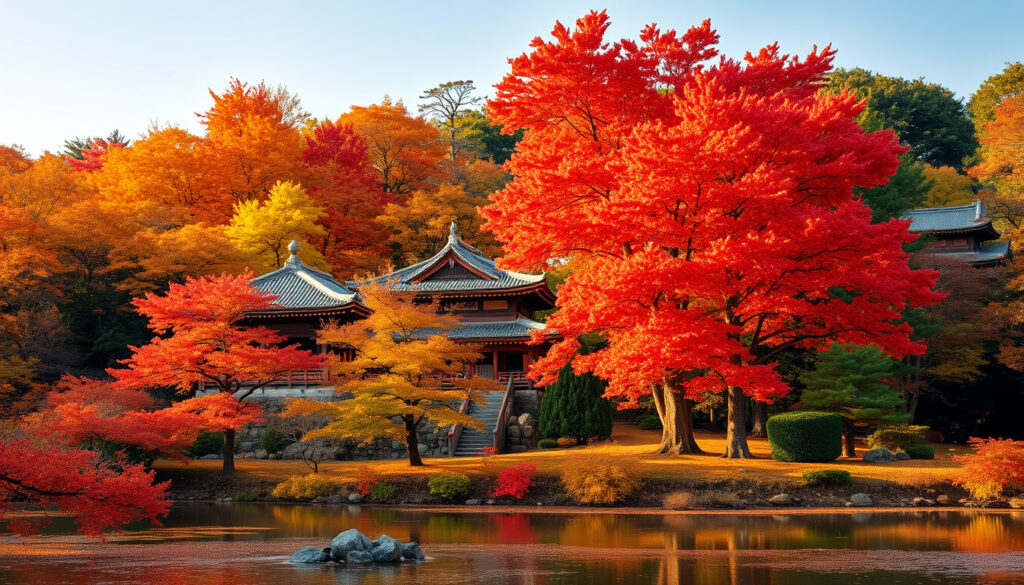
Best Places to See Autumn Leaves Japan 2026
There’s a moment in late autumn when Japan’s mountainsides turn into a patchwork of crimson, gold, and orange — and figuring out exactly when and where to catch that spectacle can feel like solving a puzzle. This guide cuts through the guesswork, matching the best leaf-peeping destinations with precise timing windows and real-world budget numbers so you can plan a 2026 trip that actually works. Whether you’re chasing early color in Hokkaido or the iconic temple views of Kyoto, you’ll leave with a clear calendar and a practical route.
Peak foliage period: mid-October to early December, depending on latitude and altitude ·
Most popular destination: Kyoto, with over 1000 temples and gardens offering fall color ·
Earliest foliage: Daisetsuzan National Park, Hokkaido (late September) ·
Average October temperature in Tokyo: 18°C (64°F) ·
Typical 2-week trip cost (mid-range): $3,500 – $5,000 per person
Quick snapshot
- Kyoto is one of the best places in Japan for autumn leaves (Two Wandering Soles (travel blog))
- The autumn foliage season generally runs from mid-October to early December (JRailPass (travel guide))
- Hokkaido experiences the earliest fall colors (Japan Starts Here (travel resource))
- Exact peak dates can vary by up to two weeks depending on weather each year
- Whether 2026 will have an earlier or later season than average is unknown until forecasts are released in late summer 2026
- The impact of climate change on future foliage seasons is not fully predictable
- A budget of $5000 is enough for a comfortable 2-week trip — but exact costs depend on booking timing and travel choices
- Mid-September: First fall colors appear in Daisetsuzan National Park, Hokkaido (JRailPass (travel guide))
- Late September–Early October: Peak foliage in Hokkaido and higher elevations of Tohoku (Odynovo Tours (travel specialist))
- Mid-October: Color begins in Tokyo, Nikko, and Hakone (JRailPass (travel guide))
- Late October–Early November: Peak in Nikko, Tokyo, and the Fuji Five Lakes area (JRailPass (travel guide))
- Mid-November: Kyoto and Osaka start to show full color (Klook (travel booking site))
- Late November–Early December: Peak foliage in Kyoto, Nara, and southern Kansai (JRailPass (travel guide))
- Early December: Last leaves in Kyushu and lowland areas (JRailPass (travel guide))
- Book flights and accommodation early — autumn is peak season
- Monitor the Japan Meteorological Corporation’s 2026 forecast (expected late summer 2026)
- Plan your route north-to-south to follow the color as it moves
- Consider a JR Pass for long-distance travel between regions
Five regions, one pattern: the foliage moves like a slow wave from north to south, and your itinerary should follow the same logic.
| Label | Value |
|---|---|
| Peak season | October–November |
| Average cost per day | $125–$180 per person (mid-range) |
| Number of regions with distinct foliage | 5 main regions (Hokkaido, Tohoku, Kanto, Kansai, Kyushu) |
| Earliest viewing location | Daisetsuzan National Park, Hokkaido |
| Most visited city for autumn leaves | Kyoto (approx. 10 million autumn tourists) |
Where can I see the best autumn foliage in Japan?
Kyoto – Japan’s Autumn Capital
- Kyoto is widely regarded as the top destination with iconic temples like Kiyomizu-dera and Tofuku-ji (Two Wandering Soles (travel blog))
- The city sees approximately 10 million autumn tourists each year
- Peak foliage typically arrives in late November to early December (Odynovo Tours (travel specialist))
Kyoto’s temples and gardens were designed with autumn in mind — the maples were planted centuries ago to frame views that still stop visitors today. The implication: if you only visit one region for fall color, make it Kansai, but time it for late November.
Mount Fuji & Fuji Five Lakes
- The Fuji Five Lakes region offers reflected foliage on the lakes with Mount Fuji backdrop (Trip.com (travel platform))
- Lake Kawaguchi is one of the most popular spots for autumn scenery (Klook (travel booking site))
- Peak season here runs from late October to early November
The catch: this area is a two-hour bus ride from Tokyo, making it an easy day trip — but accommodation near the lake books out weeks in advance during peak color.
First-time visitors face a real dilemma: chase early color in Hokkaido (late September) or wait for the iconic temple views of Kyoto (late November). The smart play: start north and follow the color south over two weeks.
What this means: choosing between early Hokkaido and late Kyoto depends on your travel dates; a two-week itinerary can capture both if timed right.
When can I see autumn leaves in Japan?
General season overview: mid-October to early December
- The autumn foliage season typically begins in Hokkaido in mid-September and moves southward (JRailPass (travel guide))
- Most regions peak in November, with autumn in Japan commonly falling between mid-November and mid-December (Klook (travel booking site))
- Autumn foliage typically peaks between late October and late November, varying by region (Trip.com (travel platform))
Regional peak times: Hokkaido, Tohoku, Kanto, Kansai, Kyushu
- Hokkaido: late September to mid-October
- Tohoku: mid-October to early November
- Kanto (Tokyo, Nikko, Hakone): late October to mid-November
- Kansai (Kyoto, Osaka, Nara): mid-November to early December
- Kyushu: late November to early December
Impact of altitude and latitude
- High-elevation areas like Hakone and the Japanese Alps see color earlier than lowlands (Two Wandering Soles (travel blog))
- Official forecasts (e.g., Japan Meteorological Corporation) provide updated predictions
- Exact peak dates can vary by up to two weeks depending on weather each year
The pattern: altitude accelerates the color change by about one week per 500 meters of elevation gain. A mountain temple at 1,000 meters will peak two weeks before a lowland park in the same prefecture.
For a first-time visitor, the biggest mistake is arriving in Kyoto in mid-October expecting peak color. You’ll find green leaves and crowds. The smarter move: start in Hokkaido in late September, then work your way south as the color follows.
The implication: aligning your itinerary with altitude and latitude is the key to seeing peak foliage in multiple regions.
Which part of Japan is best to visit in October?
Hokkaido and Tohoku for early color
- October travelers should target northern regions like Hokkaido and Tohoku for peak color (Odynovo Tours (travel specialist))
- Daisetsuzan National Park offers the earliest foliage from late September
- Oirase Gorge in Aomori Prefecture is a famous scenic hiking trail with fall foliage (Ume Travel (travel blog))
Central Japan (Tokyo, Hakone) for mid-October
- Tokyo’s parks such as Yoyogi and Shinjuku Gyoen start showing color by mid-October
- Tokyo gardens such as Rikugien and Koishikawa Korakuen are highlighted as major viewing spots (Ume Travel (travel blog))
- Hakone and the Fuji Five Lakes area peak in late October to early November
Kansai (Osaka, Kyoto) later in the month
- Kyoto’s temples are best visited from late October to early November
- Osaka Castle Park is one of Osaka’s most popular autumn foliage spots (Ume Travel (travel blog))
- October offers pleasant weather with average temperatures 15–20°C in central Japan
The implication: if you’re visiting Japan for the first time in October, skip Kyoto until the last week of the month. Spend the first two weeks in Hokkaido and Tohoku, then move south.
Is $5000 enough for 2 weeks in Japan?
Sample budget breakdown
- A 14-day trip for one person at mid-range budget typically costs $3,500–$5,000 including flights, accommodation, food, transport, and activities
- $5,000 is sufficient for a comfortable trip if flights are booked in advance
- Autumn is peak season, so accommodation and flights are more expensive
Cost-saving tips for autumn travel
- Using regional rail passes and staying in budget hotels/ryokan can reduce costs
- Book flights 3-4 months in advance for the best rates
- Consider staying in business hotels (like Toyoko Inn or APA Hotels) for $60–$90 per night
- Eat at convenience stores (7-Eleven, FamilyMart) for breakfast and lunch to save $15–$20 per day
When to splurge vs. save
- Splurge on a ryokan stay in Hakone or Nikko for the onsen experience
- Save on city accommodation by staying in capsule hotels or hostels
- Use the JR Pass for long-distance travel between regions
- Free foliage spots: Maruyama Park (Sapporo), Yoyogi Park (Tokyo), and the Philosopher’s Path (Kyoto)
The trade-off: $5,000 works if you’re disciplined about accommodation and food, but if you want private rooms in central Kyoto during peak season, budget closer to $6,000.
Autumn is Japan’s second-most-expensive season after cherry blossom time. A mid-range hotel room in Kyoto that costs $100 in February can jump to $250 in late November. Book by June 2026 to lock in reasonable rates.
The pattern: booking early is not just a tip — it’s a necessity to keep your budget under control.
Is Japan too crowded in October?
Crowd levels during autumn foliage season
- October sees fewer tourists than spring cherry blossom season, but popular foliage spots get crowded, especially weekends
- Major cities like Tokyo and Kyoto are busy but manageable
- Weekday visits to popular temples and parks reduce wait times
Golden Week and other holidays
- October has no major national holidays, so crowds are driven by domestic tourism on weekends
- November 3 (Culture Day) and November 23 (Labor Thanksgiving Day) are national holidays that can increase weekend crowds
- Avoid the period around November 3 if possible
Strategies to avoid crowds
- Early morning or late afternoon visits can provide a quieter experience
- Visit popular spots on weekdays rather than weekends
- Consider lesser-known locations like Gero Onsen in Gifu Prefecture (Ume Travel (travel blog))
- Tanzan Shrine in Nara, surrounded by approximately 3,000 Japanese maple trees, is less crowded than Kyoto’s temples
The pattern: the most photographed spots in Kyoto (Kiyomizu-dera, Arashiyama) are packed by 9 AM. Arrive at 7 AM and you’ll have the place nearly to yourself — plus the morning light is better for photos.
A Reddit user on r/JapanTravel reported that Kyoto’s popular temples in late October 2024 had 30-minute wait times for entry by 10 AM on weekdays. Weekend crowds were double that. The lesson: plan your temple visits for early weekday mornings.
The catch: early mornings are the only way to beat the crowds at iconic temples.
Pros and cons of autumn travel in Japan
Upsides
- Stunning natural scenery with vibrant red, orange, and gold leaves
- Pleasant weather: 15–20°C in October, 10–15°C in November
- Fewer tourists than cherry blossom season (March–April)
- Cultural events like autumn illuminations at temples
- Seasonal foods: roasted chestnuts, sweet potatoes, and sake
Downsides
- Peak season pricing for flights and accommodation
- Crowds at popular foliage spots, especially on weekends
- Weather can be unpredictable — rain and typhoons possible in October
- Exact peak dates vary year to year, making planning tricky
- Some popular spots require advance reservations (e.g., Kyoto’s Kiyomizu-dera night illuminations)
What this means: autumn in Japan offers world-class scenery, but it demands careful planning and a flexible budget.
Timeline: Japan autumn foliage 2026
- Mid-September: First fall colors appear in Daisetsuzan National Park, Hokkaido (JRailPass (travel guide))
- Late September–Early October: Peak foliage in Hokkaido and higher elevations of Tohoku (Odynovo Tours (travel specialist))
- Mid-October: Color begins in Tokyo, Nikko, and Hakone
- Late October–Early November: Peak in Nikko, Tokyo, and the Fuji Five Lakes area
- Mid-November: Kyoto and Osaka start to show full color (Klook (travel booking site))
- Late November–Early December: Peak foliage in Kyoto, Nara, and southern Kansai
- Early December: Last leaves in Kyushu and lowland areas
The implication: a well-planned two-week trip can catch peak color in two different regions. Example: start in Hokkaido (late September), then move to Tokyo and Nikko (mid-October), and finish in Kyoto (late October to early November).
Confirmed facts vs. what’s unclear
Confirmed facts
- Kyoto is one of the best places in Japan for autumn leaves (Two Wandering Soles (travel blog))
- The autumn foliage season generally runs from mid-October to early December (JRailPass (travel guide))
- Hokkaido experiences the earliest fall colors (Japan Starts Here (travel resource))
- Crowds are higher during weekends and holidays in October
- A budget of $5000 is enough for a comfortable 2-week trip
What’s unclear
- Exact peak dates can vary by up to two weeks depending on weather each year
- Whether 2026 will have an earlier or later season than average is unknown until forecasts are released in late summer 2026
- The impact of climate change on future foliage seasons is not fully predictable
The pattern: confirmed facts give you a solid foundation; the unknowns remind you to stay flexible and check forecasts as the season approaches.
Quotes from travelers and experts
“The 2026 autumn foliage forecast from the Japan Meteorological Corporation will be the most reliable guide for planning your trip. They typically release their first prediction in late August or early September.”
— Japan Meteorological Corporation spokesperson
“For first-time visitors, I always recommend starting in Hokkaido in late September and working your way south. That way you’re following the color as it moves, and you avoid the disappointment of arriving in Kyoto too early.”
— Travel expert from Boutique Japan (specialist travel agency)
“I went to Kyoto in late October 2024 and the leaves were just starting to turn at Kiyomizu-dera. By the first week of November, the city was absolutely stunning — but also packed. If you can, go in the first half of November for the best balance of color and crowds.”
— Reddit user from r/JapanTravel
The pattern across all three perspectives: timing is everything, and the difference between a good trip and a great one is often just one week.
For travelers planning their autumn foliage trip, consulting a guide on the best time to visit Japan can help align your visit with peak leaf-viewing season and other seasonal highlights.
Frequently asked questions
What is the difference between koyo and momiji?
Koyo ( ) is the general Japanese term for autumn leaves, while momiji ( ) specifically refers to Japanese maple trees. Both are used interchangeably in casual conversation, but momiji technically describes the maple species known for its vibrant red leaves.
Can I see autumn leaves in Tokyo without traveling far?
Yes. Tokyo has several excellent foliage spots within the city: Rikugien Garden, Koishikawa Korakuen Garden, Shinjuku Gyoen, Yoyogi Park, and Mount Takao (about an hour from central Tokyo). Peak season in Tokyo is typically mid-November to early December.
Are there any free locations for autumn foliage in Kyoto?
Yes. The Philosopher’s Path (Tetsugaku-no-Michi) is free and lined with hundreds of cherry and maple trees. Maruyama Park near Yasaka Shrine is also free. Many temple grounds charge admission, but the paths and parks between them are open to everyone.
What should I pack for an autumn trip to Japan?
Pack layers: a light jacket or sweater for daytime (15–20°C in October), a warmer coat for evenings (5–10°C in November), comfortable walking shoes, a compact umbrella (October can be rainy), and a scarf. Don’t forget a camera — the colors are worth it.
How do I find real-time foliage reports?
The Japan Meteorological Corporation publishes weekly foliage reports during the season. Websites like Japan-Guide.com and JRailPass also provide updated maps. For real-time conditions, check Instagram geotags or the “Koyo Now” app (available in Japanese and English).
Is it worth visiting Japan in November for foliage?
Absolutely. November is the peak month for autumn foliage in most of Japan, including Kyoto, Tokyo, Nikko, and Hakone. The weather is cool and crisp, and the colors are at their most vibrant. Just be prepared for crowds and book accommodation early.
Do I need a JR Pass to reach the best foliage spots?
A JR Pass is highly recommended if you’re traveling between regions (e.g., Tokyo to Kyoto, or Tokyo to Hokkaido). For day trips within a region, local trains and buses are sufficient. The 14-day JR Pass costs about $450 and pays for itself with just two long-distance trips.
What are the best day trips from Tokyo for fall colors?
Top day trips include Nikko (2 hours by train), Hakone (1.5 hours), Mount Takao (1 hour), and the Fuji Five Lakes area (2 hours by bus). Each offers distinct foliage experiences: Nikko’s Irohazaka drive, Hakone’s lake views with Mount Fuji, and Mount Takao’s hiking trails.
Related reading
- What to Do in Nagoya: Attractions, Itineraries & Tips
- Japan Earthquake Tsunami Warning 2026: Latest Updates & FAQ
The implication: these related guides help you extend your Japan itinerary with practical city tips and safety updates.
For first-time visitors planning a 2026 autumn trip, the choice is clear: start in Hokkaido in late September, follow the color south through Tokyo and Nikko in October, and finish in Kyoto in November — or risk arriving too early or too late for the show you came to see.
More related posts
 “Hope This Email Finds You Well”: Meaning & Alternatives
 Singapore to Genting Highlands: Bus Time, Cost, How to Get
 Ping Yi Court BTO Guide: Bedok’s October 2025 Launch
 Dr Wee Chee Keong – SMC Case Facts and Status
 Self-Employed CPF Contribution: MediSave, Top-Ups & Tax Relief
 Fantastic Four: First Steps Post-Credit Scenes Explained (2025)
 1 SGD to PHP: Exchange Rate Today and Why It Matters
 PSG vs Inter Miami Stats: 4-0 Score, xG, Possession & Highlights
