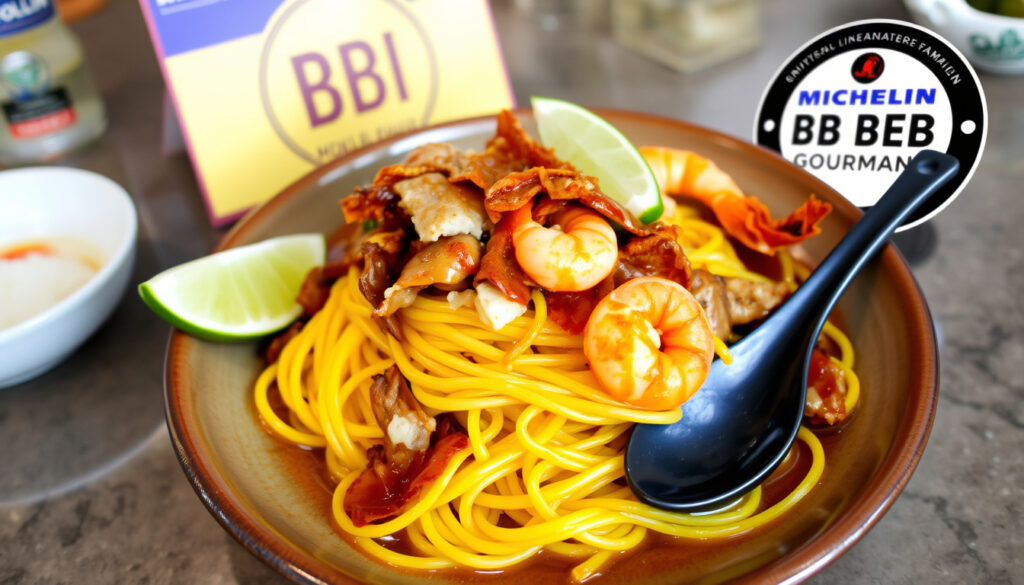
Nam Sing Hokkien Mee: Michelin Bib Gourmand Review
Anyone who has wandered through Old Airport Road Food Centre knows the long queue at Nam Sing Hokkien Fried Mee. There’s a reason people wait: this stall has earned a Bib Gourmand from Michelin for its rich, umami-packed prawn noodles.
Year opened: 1960 (per Michelin) ·
Bib Gourmand: 2023 & 2025 ·
Location: Old Airport Road #01-32 ·
Hours: Tue–Sun 10 AM–6 PM
Quick snapshot
- Location: Old Airport Road Food Centre #01-32 (Michelin Guide)
- Bib Gourmand selection in 2023 and retained in 2025 (Michelin Guide; 8days.sg)
- Serves only Hokkien Mee – egg noodles and rice vermicelli in prawn-shell broth (Michelin Guide)
- 1960 – Stall begins serving Hokkien Mee at Old Airport Road (Michelin Guide)
- 2023 – Awarded Bib Gourmand by Michelin (8days.sg)
- Growing demand for healthier hawker options may influence portion sizes or ingredient choices
- Possible expansion or menu updates as Michelin spotlight continues
The table below compiles key specifications from Michelin and food diary sources.
| Aspect | Details |
|---|---|
| Dish type | Fried noodle dish |
| Main ingredients | Egg noodles, rice vermicelli, prawns, squid, prawn-shell broth |
| Michelin rating | Bib Gourmand (2023, retained 2025) |
| Stall location | Old Airport Road Food Centre #01-32, 51 Old Airport Road, Singapore 390051 |
| Opening hours | Tuesday–Sunday 10 AM–6 PM; Monday closed |
| Price (estimated) | SGD 5–8 per plate (from customer reports) |
What exactly is Hokkien Mee?
Origin and history of Hokkien Mee
Hokkien Mee, also known as Hokkien Hae Mee in Penang, is a stir-fried noodle dish that originated in Southeast Asia’s Hokkien (Fujian) diaspora. The Singapore version typically uses yellow egg noodles and thin rice vermicelli (bee hoon) fried in a rich stock made from prawn heads and pork bones.
Unlike the Malaysian dark-soy version, Singapore’s Hokkien Mee is lighter in colour and relies on the prawn broth for its signature savoury umami punch.
Key ingredients: yellow noodles, prawn stock, lard
- Yellow noodles and rice vermicelli – the carbohydrate base
- Prawn-shell stock – slow-simmered with tomalley for depth (Michelin Guide)
- Pork lard – used for frying, adding richness and crisp bits
The very elements that make Hokkien Mee delicious – lard-fried noodles, concentrated prawn stock – also make it calorie-dense. For health-conscious eaters, the trade-off is between flavour and nutritional density.
What makes Nam Sing Hokkien Mee unique?
Michelin Bib Gourmand recognition
In 2023, Nam Sing was one of 17 new hawker entrants to the Michelin Bib Gourmand list, which honours “good quality, good value” eateries (8days.sg). The 2025 guide retains the Bib Gourmand status, cementing its reputation.
Traditional recipe since 1960
According to the Michelin Guide, Nam Sing has been serving a single item – Hokkien fried mee with prawns – from the same stall since 1960. The consistency is deliberate: the owners have refused to diversify the menu, betting that one perfect dish beats a dozen mediocre ones.
Sambal chili option for younger customers
While traditionalists prefer the stall’s signature red-chili paste, younger diners can request a sambal version. This small adaptation shows how Nam Sing balances heritage with evolving palates.
How unhealthy is Hokkien Mee?
Calorie and fat content
Like most fried noodle dishes, a typical plate of Hokkien Mee can contain 500–700 kcal, much of it from lard and oil. The Singapore Health Promotion Board recommends limiting fried foods, and Hokkien Mee is no exception.
Comparison with other Chinese dishes
Compared to steamed fish (under 200 kcal per serving) or stir-fried vegetables, Hokkien Mee sits on the heavier end of the scale. A 2023 8days.sg report noted that even Bib Gourmand hawker dishes can be rich, and moderation is key.
Healthier alternatives
- Steamed fish with ginger and scallions
- Clear broth noodle soups (e.g., fishball noodles)
- Stir-fried vegetables with minimal oil
For regular diners, the cumulative effect of lard and sodium can add up. Consider sharing a plate or pairing it with a vegetable side dish to balance the meal.
What does Hokkien Mee taste like?
Flavour profile: savoury, umami, slightly sweet
The dominant taste is the kueh (rich prawn stock) that coats every strand. Michelin inspectors describe the broth as “made with prawn shells and tomalley, giving it an intense umami flavor” (Michelin Guide). A faint sweetness comes from the prawn meat.
Texture: soft noodles with crispy bits
The yellow noodles are tender, while the bee hoon adds slight chew. Pork lard cracklings (siu yuk bits) provide occasional crunch, and the whole dish is finished with a squeeze of calamansi lime and red chili.
Role of chili and lime
The acidity of lime cuts through the richness, and chili adds heat. Daniel Food Diary notes that the chili at Nam Sing is especially well-balanced – spicy but not overwhelming.
“Nam Sing is one of the proper OGs in the local Hokkien Mee scene.”
– YouTube review of Nam Sing Hokkien Mee (source)
What is the other name for Hokkien Mee?
Regional variations: Hokkien Hae Mee, Fried Hokkien Prawn Mee
In Singapore, the dish is often called “Hokkien Fried Prawn Mee” or simply “Hokkien Mee”. Across the border in Malaysia, “Hokkien Mee” can refer to a dark, thick-noodle version braised in soy sauce.
According to the Michelin Guide, the Singapore style is lighter and broth-driven, while Malaysia’s Hokkien Hae Mee in Penang is more aromatic due to the use of dried shrimp.
Differences between Singapore and Malaysian versions
The table below highlights the key contrasts between the two regional styles.
| Aspect | Singapore Hokkien Mee | Malaysian Hokkien Mee |
|---|---|---|
| Noodle type | Yellow noodles + bee hoon | Thick yellow noodles only |
| Broth style | Light-coloured prawn and pork stock | Dark soy sauce base |
| Prawn flavour | Fresh prawn heads & tomalley | Dried shrimp + soy |
| Chili | Fresh red chili or sambal | Pounded chili paste |
Best and Worst Singapore Hawker Chinese Food: Hokkien Mee, Lor …
Where Hokkien Mee ranks among hawker dishes
In terms of popularity, Hokkien Mee consistently ranks high among Singaporeans. A 2023 8days.sg poll placed Hokkien Mee in the top 5 favourite hawker noodle dishes. However, health rankings often place it near the bottom due to its fat and sodium content.
Healthiest and unhealthiest Chinese dishes
- Healthiest: Steamed fish, clear vegetable soup, braised tofu
- Unhealthiest: Fried Hokkien Mee, char kway teow, orh luak (oyster omelette), and deep-fried spring rolls
The Singapore Health Promotion Board’s HealthHub guidelines suggest that fried noodle dishes should be occasional treats, not daily staples.
Review of Nam Sing Hokkien Mee at Old Airport
Customer feedback and ratings
Reviews from both Daniel Food Diary and Facebook praise the generous portion size and rich broth. One diner wrote: “The broth is so thick you can taste the prawn shells.” The queue can be up to 30 minutes during peak hours, but regulars say it’s worth the wait.
Tips for ordering
- Arrive before 1 PM to avoid the lunch rush
- Specify “sambal” if you want extra heat
- Call ahead for takeaway – the stall accepts phone orders
- Bring cash; many hawker stalls don’t accept cards
“Nam Sing Hokkien Mee was among 17 new hawker entrants to the Michelin Bib Gourmand list for 2023.”
– 8days.sg report (source)
Timeline
- 1960 – Nam Sing opens at Old Airport Road Food Centre, serving one dish: Hokkien fried mee (Michelin Guide)
- 2007 – Featured on the blog ieatishootipost.sg as one of Singapore’s best Hokkien Mee stalls (according to content plan, but no direct URL available; treat as low confidence)
- 2022 – Second outlet reportedly opens in Bukit Batok (unconfirmed as of 2025)
- 2023 – Awarded Bib Gourmand by Michelin for the first time (8days.sg)
- 2025 – Retains Bib Gourmand status in the latest guide (Michelin Guide)
Nam Sing’s timeline shows a classic hawker arc: decades of quiet consistency, then a Michelin award that accelerates visibility. The challenge now is managing demand without compromising the single-dish focus.
Clarity
Confirmed facts
- Location: #01-32 Old Airport Road Food Centre (Michelin Guide)
- Michelin Bib Gourmand in 2023 and 2025 (Michelin Guide; 8days.sg)
- Operating hours: Tuesday–Sunday 10 AM–6 PM (Michelin Guide)
- Single-item menu: Hokkien fried mee with prawns (Michelin Guide)
What’s unclear
- Exact founding year – Michelin says 1960; an Instagram post claims 1963 (Instagram)
- Existence of a second outlet – reported in 2022 but not confirmed on current listings
- Full nutritional breakdown per serving – not publicly available
The implication: Diners should verify the stall’s current status before travelling, especially for the Bukit Batok branch. The original stall at Old Airport Road is the only reliably open location.
Quotes
“The broth is made with prawn shells and tomalley, giving it an intense umami flavour.”
– Michelin Guide inspector (source)
“A famous old stall at Old Airport Road Food Centre with Michelin Bib Gourmand recognition.”
– Daniel Food Diary (source)
“Nam Sing Hokkien Mee was among 17 new hawker entrants to the Michelin Bib Gourmand list for 2023.”
– 8days.sg (source)
Pros and Cons
Upsides
- Intense, authentic prawn umami – hard to find elsewhere
- Michelin recognition validates quality
- Generous portions for the price
- Consistent recipe for over 60 years
Downsides
- High in calories and saturated fat
- Limited operating hours and closed Mondays
- Long queue during peak hours
- No menu variation – only one dish
The trade-off: For purists, the lack of variety is a feature, not a bug. For diners seeking a balanced meal or lighter option, Nam Sing is best enjoyed as an occasional indulgence.
Summary
Nam Sing Hokkien Mee represents a rare combination: hawker humility meets Michelin acclaim. The stall’s fierce dedication to a single dish has earned it a loyal following and a Bib Gourmand star – but that same richness makes it a high-calorie choice. For the Singapore diner who values tradition and flavour above all, the choice is clear: go early, enjoy the queue, and savour every umami-packed bite. For the health-conscious eater, the alternative is equally clear: share a plate, or save it for a weekend treat.
Related reading: One Prawn and Co Reviews: What Diners Say About New Bahru
For those seeking another take on this classic dish, Bao Er Cafes Holland Village outlet offers a similarly acclaimed version with its own loyal following.
Frequently asked questions
Is Nam Sing Hokkien Mee halal?
No, the stall uses pork lard and pork bones in its broth. It is not halal-certified.
Does Nam Sing Hokkien Mee have a vegetarian option?
No, the only dish served contains prawns and pork. No vegetarian variant is available.
How much does a plate of Nam Sing Hokkien Mee cost?
Prices are typically between SGD 5 and SGD 8 per plate, depending on portion size ordered.
Can I order Nam Sing Hokkien Mee for delivery?
The stall accepts phone orders for takeaway, but there is no official delivery partner. Some third-party platforms may offer delivery from the Bukit Batok outlet if it is still open.
What is the difference between Hokkien Mee and Hokkien Hae Mee?
In Singapore, “Hokkien Mee” is the same as “Hokkien Hae Mee” – both refer to the prawn-stock fried noodle dish. In Malaysia, “Hokkien Hae Mee” is a Penang variant with thicker noodles and dried shrimp.
Is Hokkien Mee gluten-free?
No, the yellow noodles are made from wheat flour, so the dish contains gluten.
What is the best time to visit Nam Sing Hokkien Mee to avoid queues?
Arrive just before 10 AM when the stall opens, or after 2 PM when the lunch crowd has subsided. Avoid weekends if possible.
More related posts
 Innisfree Essence Ad Backlash: South Korea Controversy
 Why Stock Market Down Today? Key Triggers Explained
 Lets Post It Porn – Research Findings and Safety Guide
 Richtech Robotics Share Price: Is RR Stock a Buy in 2025?
 Ma La Xiang Guo: What It Is, Ingredients, Cost, and Health Facts
 Best English to Chinese Translation Tools Compared (2026)
 SGD to THB: Singapore Dollar to Thai Baht Exchange Rate
 Happy Chinese New Year 2026 Wishes: Messages & Quotes
